
Last updated November 21, 2026
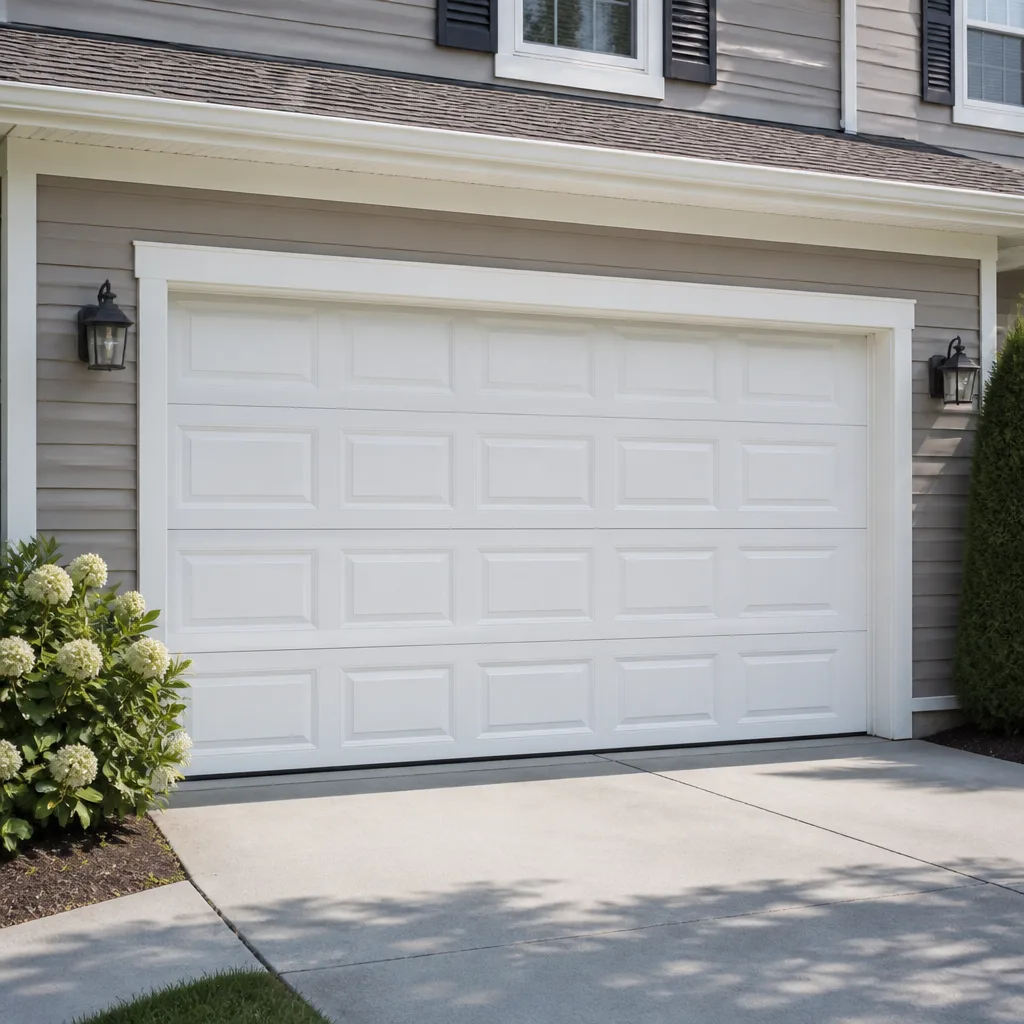 Raised-panel steel
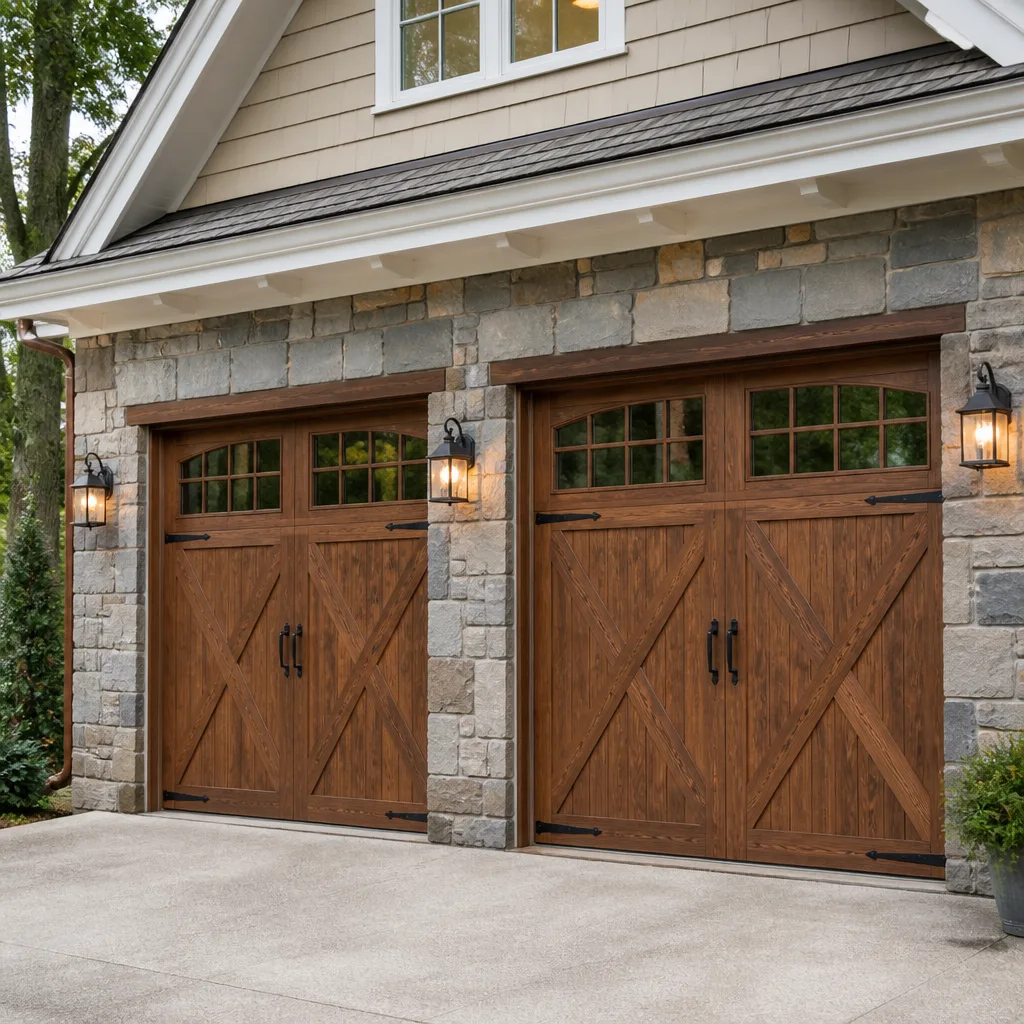 Carriage house
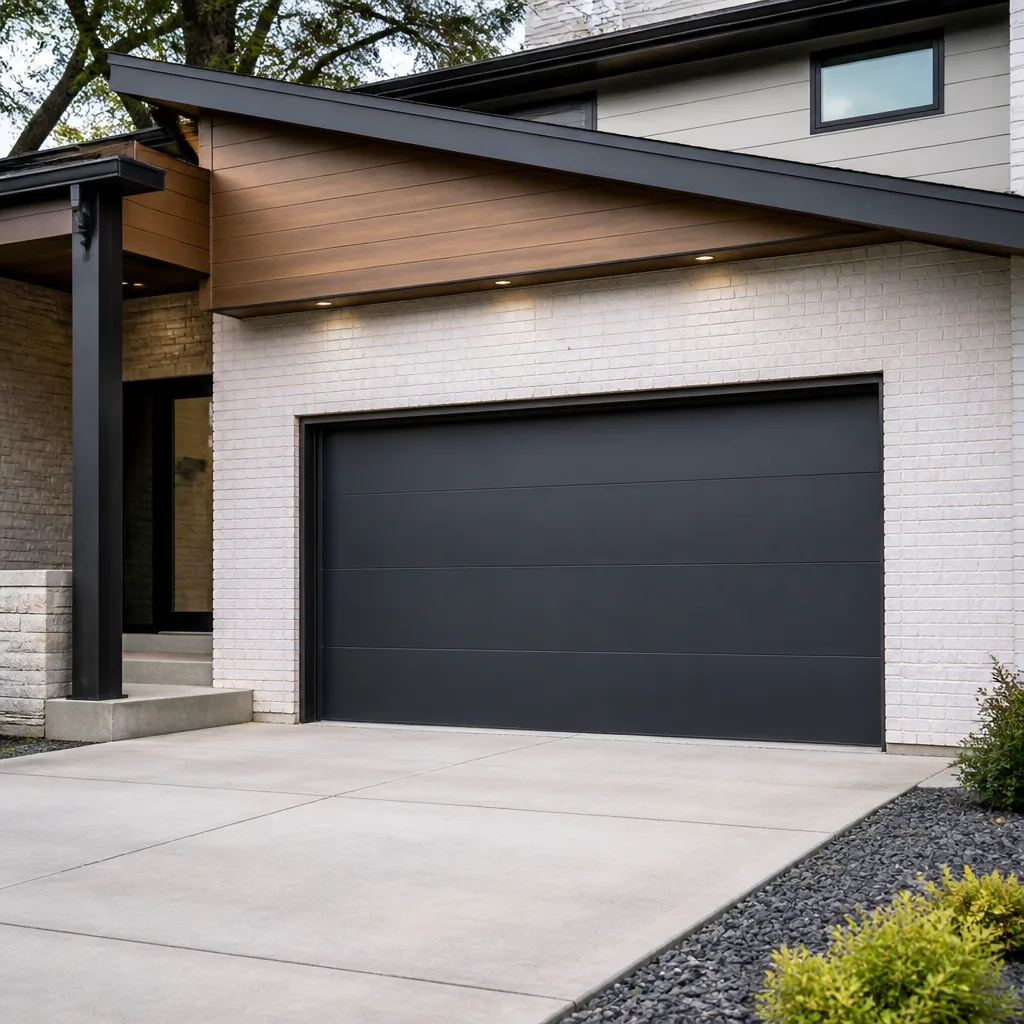 Modern flush
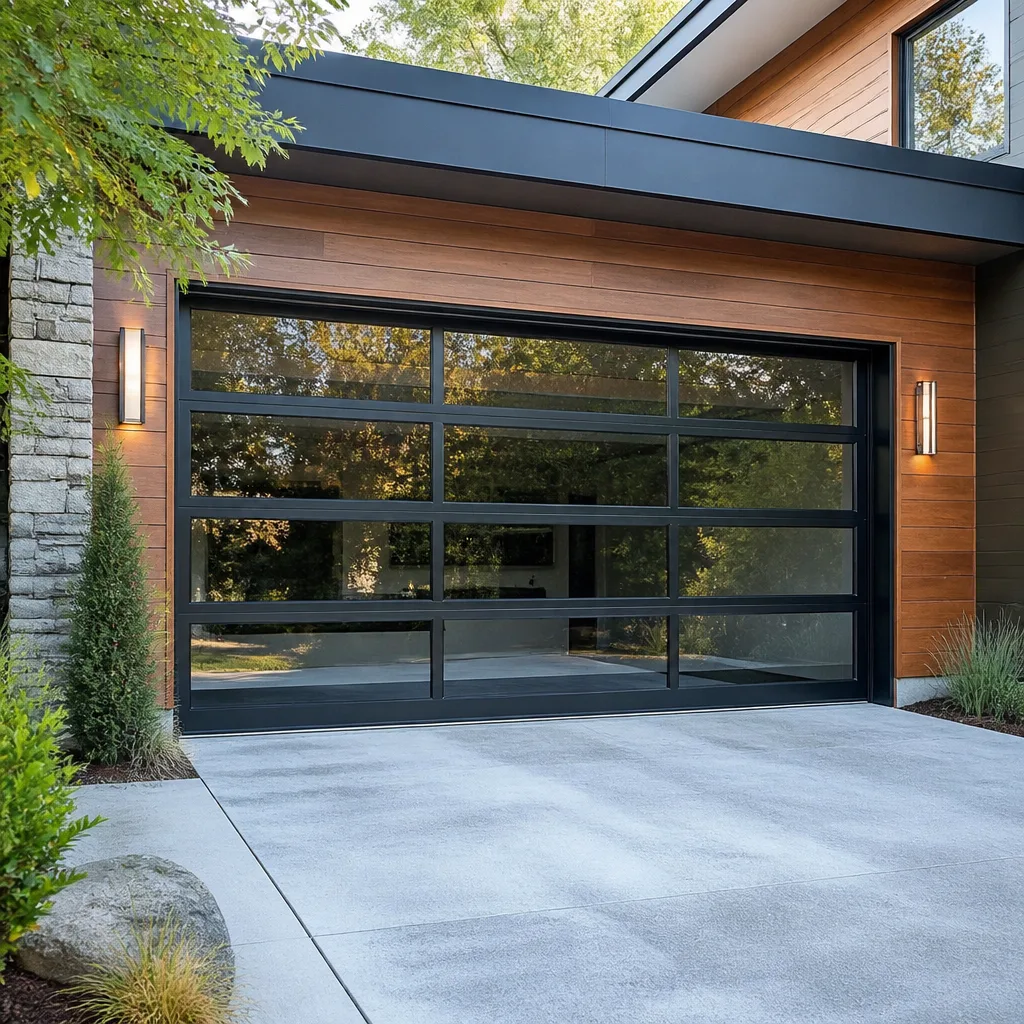 Full-view glass
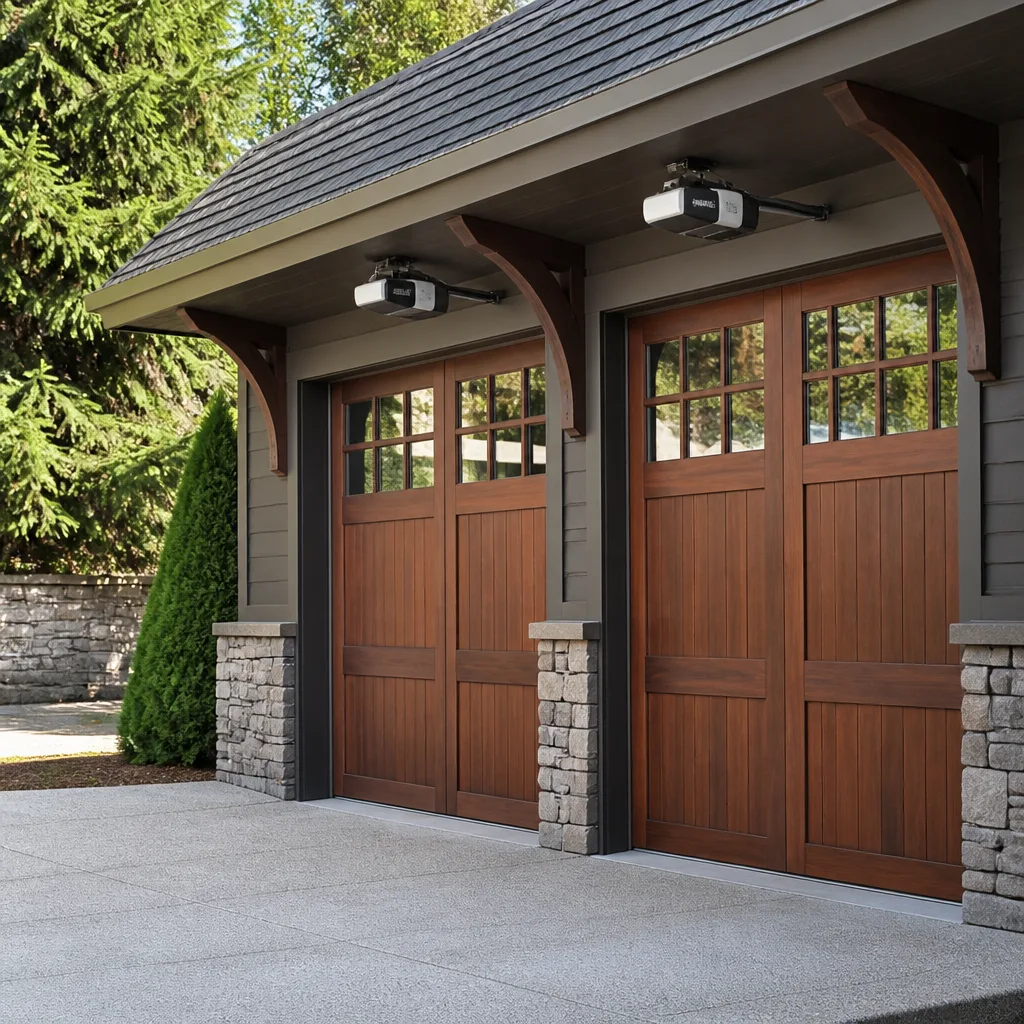 LiftMaster openers
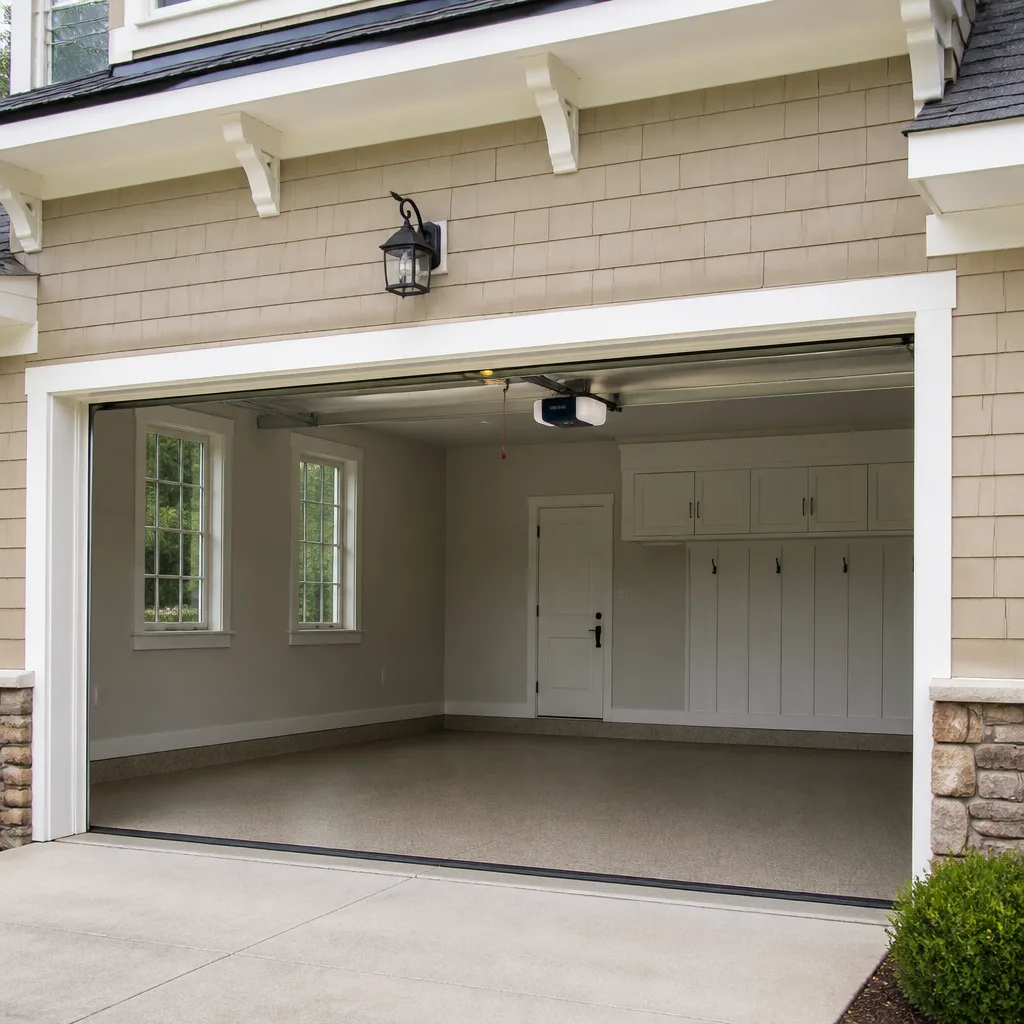 Chamberlain openers
Full 25-point door and opener safety check with every visit - springs, cables, rollers, tracks, and your LiftMaster or Chamberlain opener included
You get a price before we start. It does not change when the pro arrives.
Get your free estimateThe Complete Guide to Garage Doors in South Boston
Most South Boston homeowners share a wall, a driveway, or a T-shaped alley with a neighbor. That single fact changes almost everything about how you should think about your garage door. A failing spring or a crooked panel isn’t only your problem; it’s a shared-structure problem, and the advice you get from a suburban big-box installer rarely translates to a triple-decker off East Broadway. This guide treats South Boston itself as the starting point: the tight lots, the freeze-thaw winters, the older buildings, and the brand-specific equipment you actually own. By the end, you’ll know the full component map of a garage door, which materials and door types hold up here, who’s responsible for shared structures, and when a repair is a real job for a specialist.
Quick Answer
A garage door in South Boston is a system of springs, cables, tracks, rollers, panels, and an opener, and problems almost always trace to one worn component rather than the whole door. If you know which brand and which part you own before something breaks, you can get the right fix on the first visit instead of a generic guess. Call (844) 662-2561 for a free estimate. We answer 24/7. Fast dispatch from 7am to 7pm, Sunday through Friday.
Styles & brands we work with
- Raised-panel steel
- Carriage house
- Modern flush
- Full-view glass
- LiftMaster openers
- Chamberlain openers
Table of Contents
- The Full Component Map: What You Actually Own
- How South Boston’s Climate and Freeze-Thaw Cycles Wear Out Doors
- Space Constraints in South Boston and the Door Types That Fit
- Rowhouse and Triple-Decker Ownership: Who Fixes What
- Materials and Brands That Hold Up Here
- Openers: Low-Clearance, Side-Mount, and Smart Systems
- Springs and Cables: Why This Is Specialist Work
- A Seasonal Check You Can Actually Do Yourself
The Full Component Map: What You Actually Own
A garage door is not one machine. It’s a dozen parts that wear at different rates, and knowing each one helps you describe a problem clearly and avoid paying to replace something that isn’t broken. Before you call anyone, it’s worth understanding the whole system.
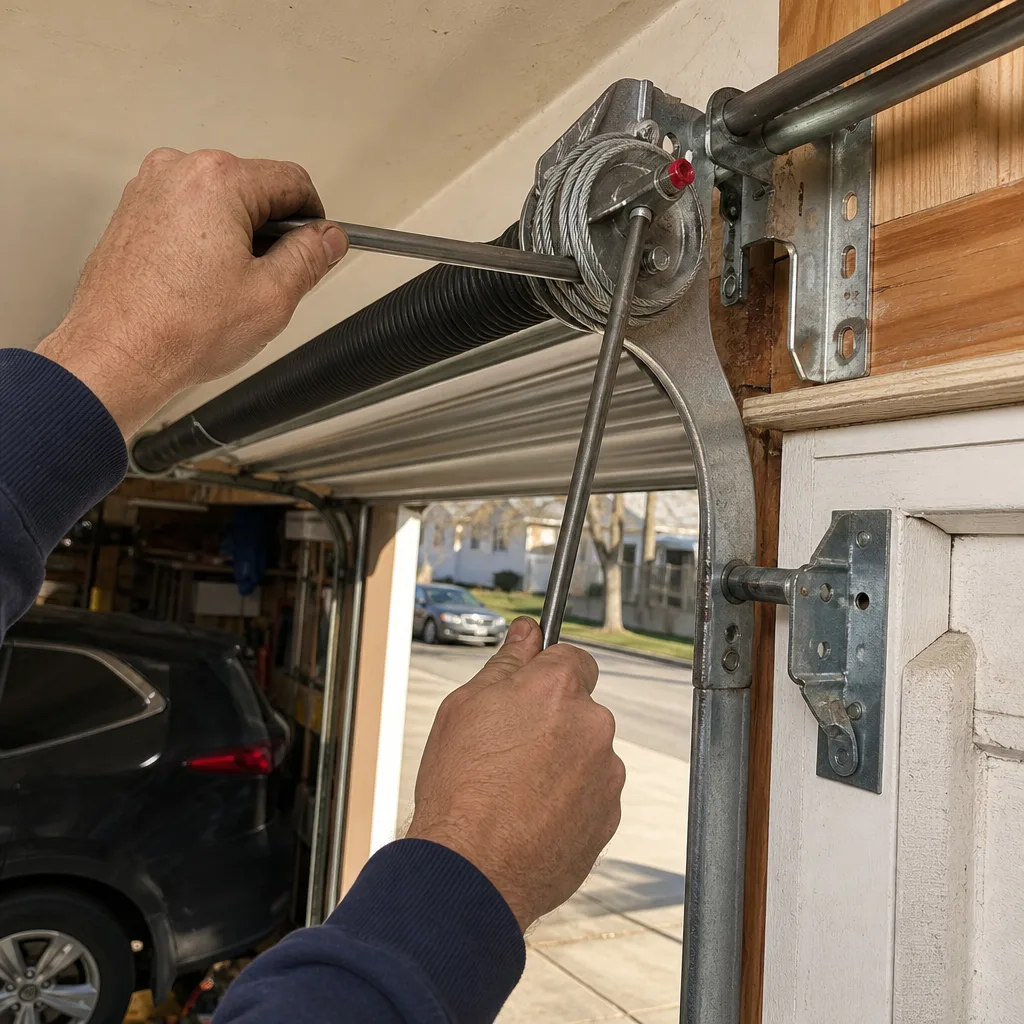
- Torsion or extension springs – the counterweight that makes a heavy door liftable. Torsion springs sit on a shaft above the door; extension springs run along the sides. Springs do the lifting, not the opener.
- Cables – steel lines that connect the door to the springs and keep tension even on both sides.
- Tracks – the vertical and horizontal rails the door travels on, with a curve that redirects the door under the ceiling.
- Rollers and hinges – the small moving parts that let panels pivot and roll. These are the cheapest parts and the most frequent source of squeaks and wobble.
- Panels and sections – the door itself, which can dent, bow, or lose its finish.
- Bottom seal and weatherstripping – the rubber barrier that keeps out drafts, water, and pests. This matters more in a cold climate than most people realize.
- Opener and its safety sensors – the motor, the rail or belt, and the photo-eye sensors near the floor.
When a South Boston door stops working, the fix is usually in the first four items on that list, not the panels or the opener. That’s why diagnosing the specific brand and part matters. We’re trained across eight major brands, including LiftMaster, Chamberlain, Craftsman, and Raynor, so we can identify the exact model in front of us rather than ordering a universal guess and hoping.
A door that’s dragging, jerking, or only lifting partway is telling you something about tension, alignment, or a worn roller. Read those symptoms early and the repair stays small.
How South Boston’s Climate and Freeze-Thaw Cycles Wear Out Doors
South Boston sits in a climate that swings hard between seasons, and that movement is what wears garage doors out faster than the door’s age would suggest. Wood swells and shrinks. Metal expands in summer and contracts in winter. Every freeze-thaw cycle works the hardware a little looser.
The practical effects show up in a few predictable places:
- Seals split early. The bottom rubber that flexes against a cold, hard floor cracks faster when it’s constantly alternating between frozen and thawed ground.
- Hardware loosens. Bolts, hinges, and track brackets back off over repeated thermal cycling. A rattle that starts in October becomes a real alignment issue by February.
- Tracks go out of plumb. Ground movement shifts the track a hair each season. A door that worked in fall can scrape in spring.
- Rollers wear unevenly. Cold stiffens the lubricant, and stiff rollers wear the track.
A common mistake is to assume a door that grinds in January needs a new opener. It usually doesn’t. The opener is doing extra work because the door itself is dragging, and replacing the motor just masks the real problem until the new one wears out too.
The other local factor is air. In a coastal neighborhood you get more airborne moisture and more corrosion pressure on springs, cables, and exposed hardware than you would in an inland Massachusetts town. That doesn’t mean every door rusts through, but it does mean stainless or coated hardware and a bit of routine attention pay off.
So the practical answer for South Boston is a door and hardware package chosen for temperature cycling and moisture, not the shiny showroom sample that would be perfect in a dry climate. Read a climate note before you read a paint color.
Space Constraints in South Boston and the Door Types That Fit
The single biggest factor driving garage door choice in South Boston isn’t style. It’s space. Driveways and garages here are short, low, and often retrofitted into buildings that were never designed for a car.
Before you pick a door, measure. You need three numbers: your ceiling height, the space above the door opening, and the depth from the opening to the back wall.
- Standard sectional door. Needs ceiling clearance and room for the horizontal track to run back under the ceiling. Great where there’s height and depth to spare. Often a tight fit in South Boston.
- Low-headroom sectional. Uses a tighter track curve to fit a door where the ceiling is close to the opening. This is the workhorse for older South Boston garages.
- Roll-up door. Coils into a drum above the opening rather than running back into the room. The answer when depth is the problem, not height.
- Side-mount door. Slides horizontally to the side instead of lifting. Rare, but a real option when the ceiling is unusable and there’s wall space to spare.
Door type and opener type are linked. A low-clearance garage usually can’t take a standard opener hanging from the ceiling, which is where a jackshaft or side-mount opener comes in. It mounts on the wall beside the torsion shaft and turns the door from the side, freeing up the overhead space entirely.
If you’re weighing a new door against a repair, this is where brand knowledge helps. We’re factory-familiar with LiftMaster, Chamberlain, Genie, Clopay, Amarr, Wayne Dalton, Craftsman, and Raynor, so we can tell you what will physically fit your opening and work with the opener you already have, instead of steering you toward a package that solves a problem you don’t have. When the right call is replacement, we handle garage door installation as a measured, scheduled job.
Rowhouse and Triple-Decker Ownership: Who Fixes What
In dense South Boston, a lot of garages and driveways are shared. You might own a unit in a triple-decker, share an alley with three neighbors, or rent a parking space behind a building you don’t own. Before you call anyone, figure out who’s actually responsible for the structure in question.
- Condominium or shared building: the door, opener, and structure may be common property handled by the association. Check your condo documents before you authorize a repair. If it’s common, the association typically controls who does the work and who pays.
- Single-family but shared driveway or alley: you usually own your door but not the shared access. Repair your door freely; check before changing anything that affects the shared path, like a new door footprint or anything that changes the driveway line.
- Renting: a tenant generally shouldn’t authorize structural or spring work. The owner of record is the decision-maker on the door and opener, even if you’re the one who lives with the noise.
The practical upshot: know who holds the keys before you spend money. A repair you authorize on common property can become a headache if the association wanted a say, and a landlord who wants a cheap patch may not be the person footing a full spring replacement later. Being clear up front saves everyone a stall in the alley.
It also affects urgency. A door stuck open on a shared structure is everyone’s security problem, not just yours. That’s exactly the kind of call where an understanding of the building matters as much as the hardware.
Materials and Brands That Hold Up Here
The best material for a South Boston door is the one that handles temperature swings and moisture without much fuss. Here’s how the main options really behave in this climate.
- Steel: the common choice, and a good one. It’s strong, low-maintenance, and available at many price points. The catch is that a bare steel panel exposed to moisture can rust at cut edges and dents, so a quality finish and care around the bottom edge matter.
- Aluminum: lighter and rust-resistant, which suits the local moisture. Less stiff than steel, so dent and impact resistance is lower.
- Wood: beautiful, and the highest-maintenance option here. Wood moves with every freeze-thaw and needs regular sealing to survive wet winters. Not the low-effort choice.
- Composite and vinyl: low-maintenance and good against moisture. Choose a strong core for the weight and structure.
- Insulated panels: worth considering if your garage shares a wall with living space, since they slow heat loss better than a single uninsulated sheet. Ask about the door’s own rating rather than assuming any insulated door performs the same.
Brand matters as much as material, because a door that fits your tracks, springs, and opener is a door that lasts. Names like Clopay, Amarr, Wayne Dalton, and Raynor are common in South Boston, and knowing how each is built and how the sections fit is what separates a clean install from a door that rattles by the second winter. If you’re still deciding between fixing what you have and starting fresh, a free in-person measure and written price will make the tradeoff concrete instead of guesswork.
Openers: Low-Clearance, Side-Mount, and Smart Systems
Your opener should match your garage’s space, not the other way around. Three types cover most South Boston setups, and each has a place.
- Belt-drive opener. Quiet and smooth. The go-to for garages under or next to living space, where noise carries into the house.
- Chain-drive opener. Rugged and budget-friendly, a bit louder. Fine for detached garages or where nobody’s sleeping above.
- Jackshaft or side-mount opener. Mounted beside the torsion shaft and turns the door from the side. Works where there’s no ceiling room and keeps the overhead clear. This is often the fix for a low South Boston garage.
Modern openers also split by connectivity. Smart-enabled units like the newer LiftMaster and Chamberlain lines pair with a phone app and respond to voice assistants; older systems run on a fixed remote or wall button. Both are repairable, and both fail in familiar ways: a sensor knocked out of line, a stripped gear, a circuit board or capacitor that’s worn out, or a belt that needs adjusting.
When an opener fails, the fix depends on the system. We service both the smart platforms and legacy systems, so you don’t have to replace a working opener just because it’s not the newest model. If your opener is the problem, we handle garage door opener repair and can tell you whether the fault is in the motor, the sensors, or the door it’s trying to lift.
Test your safety sensors monthly. If the door won’t close or reverses for no clear reason, the sensors are the first thing to check, and it’s one of the few things you can safely inspect yourself.
Springs and Cables: Why This Is Specialist Work
Garage door springs are under extreme tension, and they store enough energy to cause serious injury if they’re handled wrong. A spring can snap with real force, and a cable under load is just as dangerous. This is the one part of the system we’ll never describe a do-it-yourself fix for, because no video is worth the risk. Springs and cables should be handled by a trained professional.
What you can safely do is recognize the signs that a spring or cable is failing:
- A loud bang from the garage, or the door suddenly heavy and hard to lift by hand.
- A visible gap in the torsion spring, or a visibly kinked or slack cable.
- The door lifts unevenly, hangs crooked, or drops quickly on one side.
- The opener strains or the door only opens partway.
If you see any of that, stop operating the door and call for help. Don’t try to add tension, and don’t rely on the opener to force a door with a broken spring.
Spring repair is a core service here, not a reluctant add-on we outsource. That matters because it’s the most common serious failure on a South Boston door, and it’s also the job where a general handyman is most out of their depth. Springs are matched to the door’s weight, and a mismatched or improperly tensioned spring wears out early or puts strain on the whole system. We carry a parts inventory for the most common components, which means the right spring is more likely to go in on the first visit instead of a return trip. If you need garage door repair for a snapped spring or a door that’s dropped, that’s the call to make.
A Seasonal Check You Can Actually Do Yourself
Ten minutes of inspection each fall and spring will catch most of the small problems before they become big ones. Here’s a check anyone can do safely.
- Balance test: disconnect the opener the door’s manual release allows, lift the door halfway, and let go. A healthy door with good springs holds its position. One that falls or is very heavy needs attention.
- Visual spring and cable check: look at the springs and cables for gaps, kinks, or slack. Don’t touch; just look, and note anything off before calling.
- Listen: a door that squeaks, grinds, or rattles is telling you something. Sounds often trace to rollers, hinges, or a track that’s shifted.
- Check the seals: run a hand along the bottom seal for cracks or gaps. A split seal lets in cold and water, and it’s cheap to replace.
- Test the safety sensors: block the beam with an object and confirm the door reverses. If it doesn’t, that’s a same-day call.
- Look at the hardware: check that hinges and track brackets are snug. Loose bolts are easy to spot and, in a freeze-thaw climate, common.
What you should never do yourself: adjust or replace springs, remove a cable, or take apart the torsion shaft. Those are the high-tension parts. Lubricate the moving points you can safely reach, and leave the dangerous components to a trained professional.
Common Mistakes to Avoid
- Assuming a grinding door needs a new opener. It usually needs a repair to the door’s moving parts, and a new motor just masks a dragging door until it wears out too.
- Picking a door from a showroom photo without measuring. South Boston ceilings and driveways are tight. Always measure height, headroom, and depth first.
- Greasing or forcing a stiff, heavy door. A door that’s suddenly hard to lift has a spring problem. Forcing it can bend panels or snap a cable.
- Ignoring who owns a shared structure. In a triple-decker or condo, checking with the association before authorizing work prevents a payment headache later.
- Replacing a whole door when one panel or component failed. A single dented section or worn roller doesn’t always justify a full replacement.
- Skipping the seasonal check. Small seal cracks and loose brackets caught early are far cheaper than the damage they cause through a freeze-thaw winter.
- Trusting generic parts for a brand-name system. Right-brand parts matter for fit and longevity, and a universal guess wears out early.
See the difference
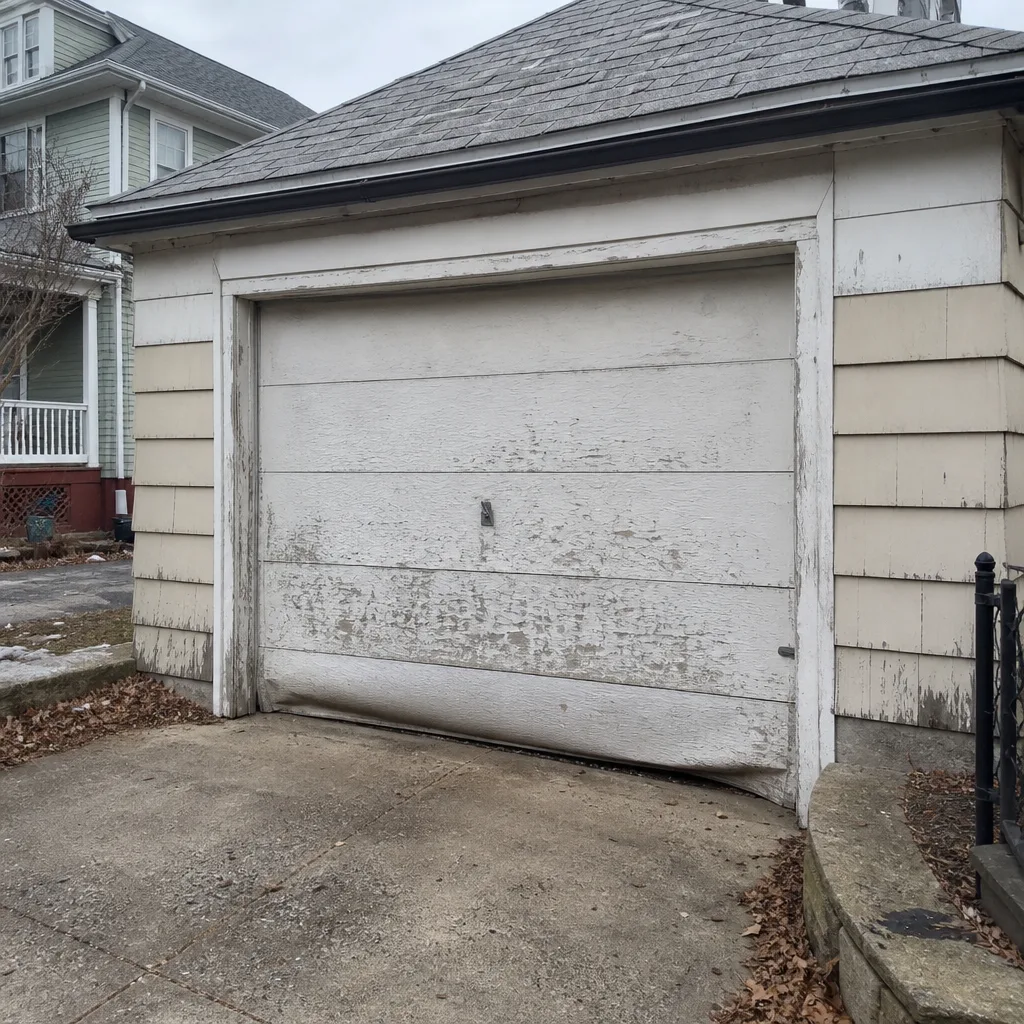 Before
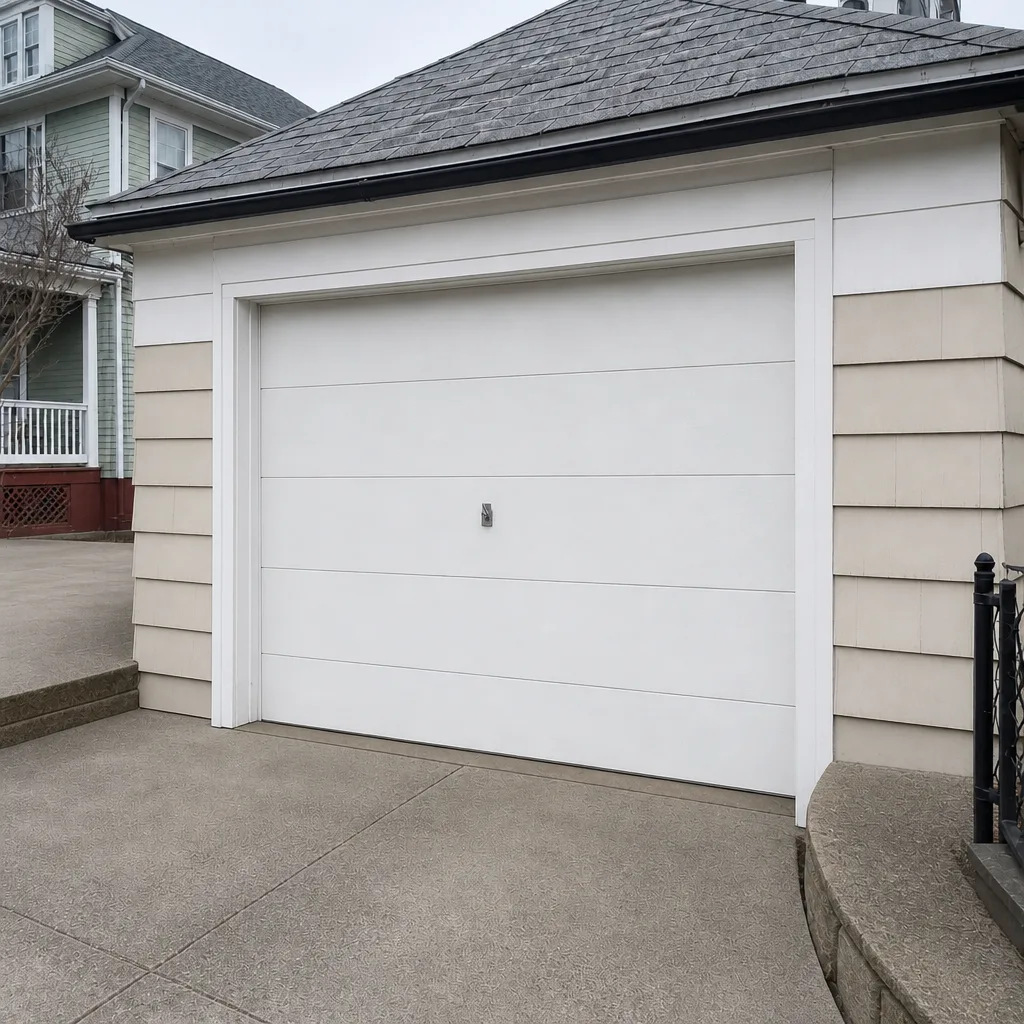 After
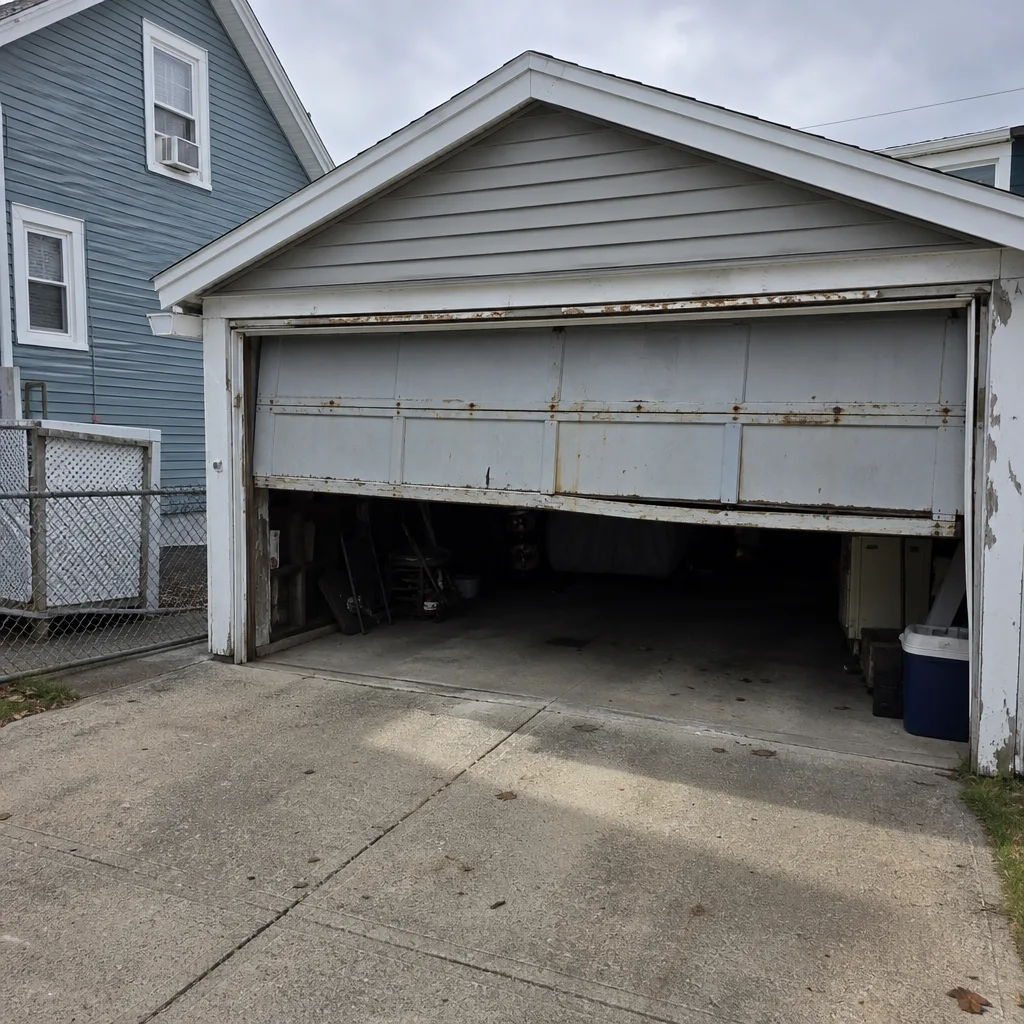 Before
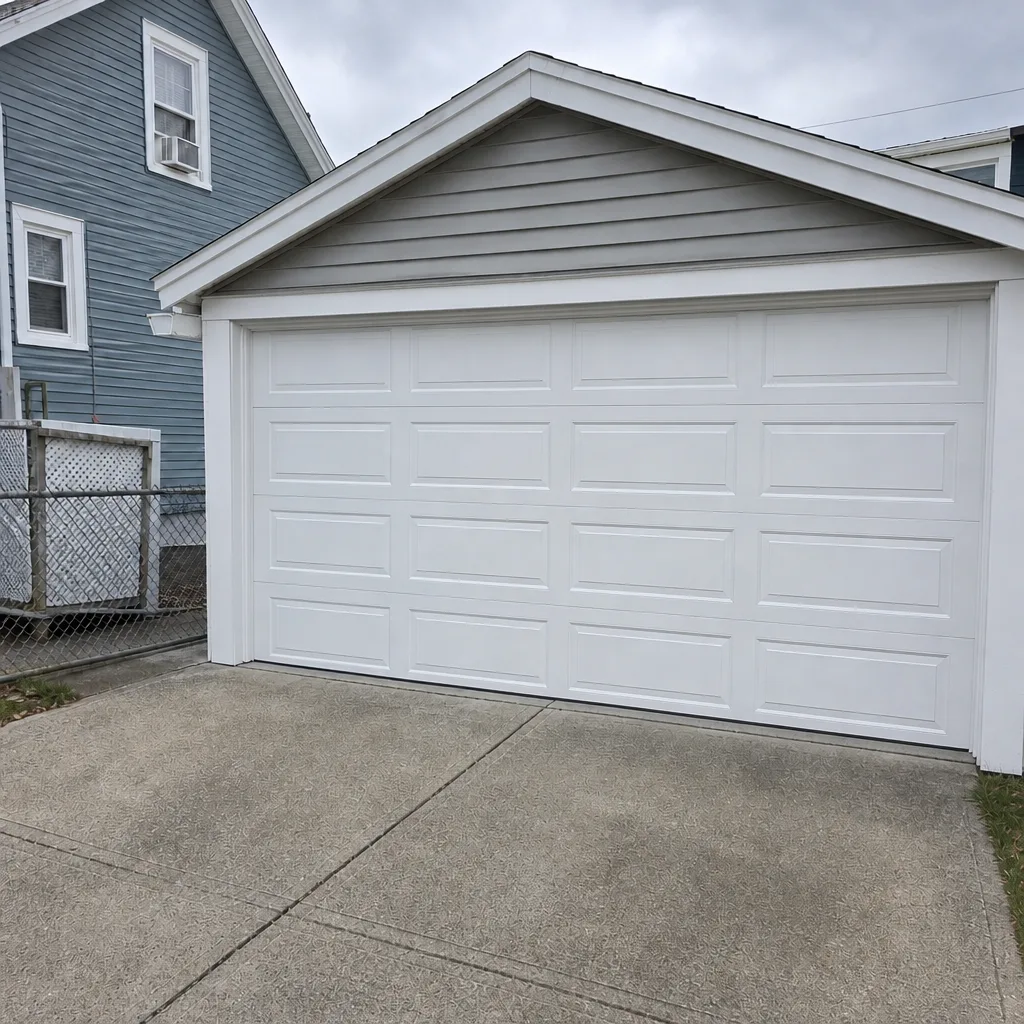 After
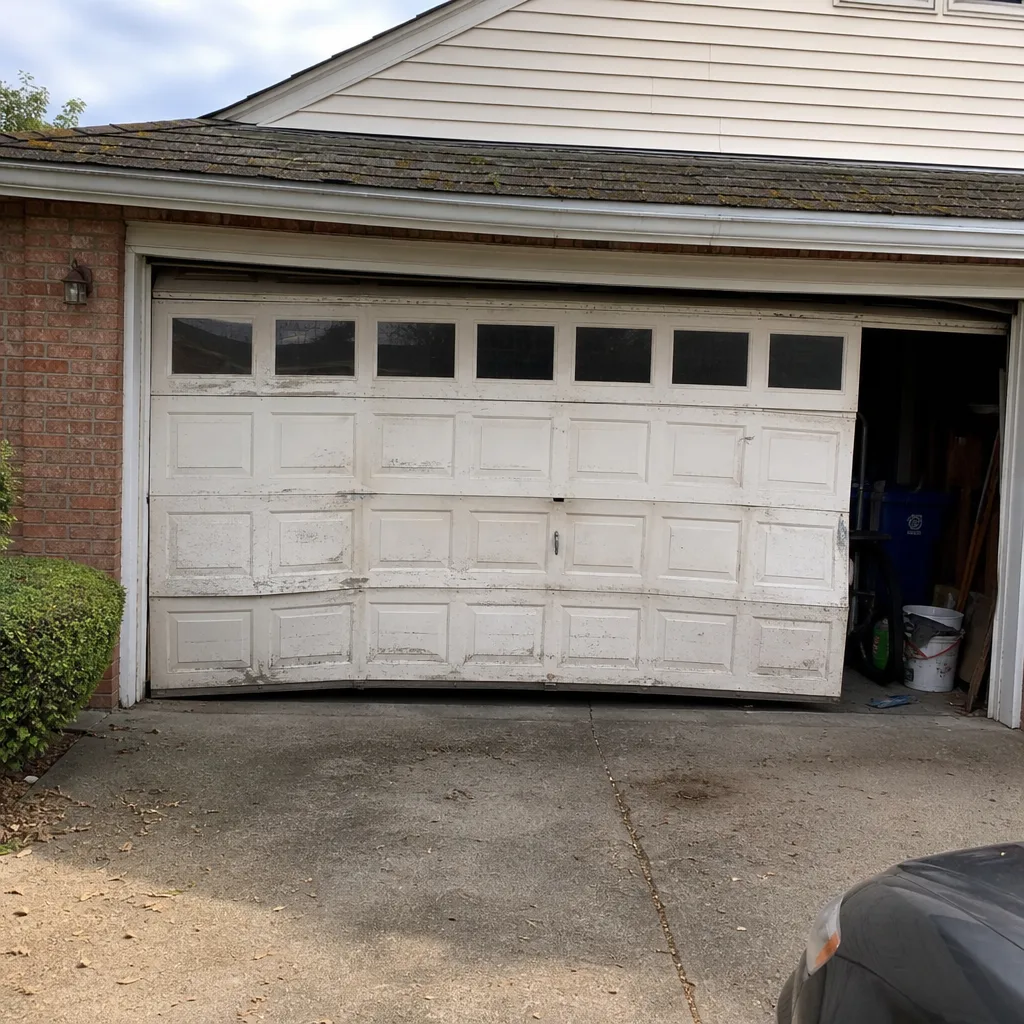 Before
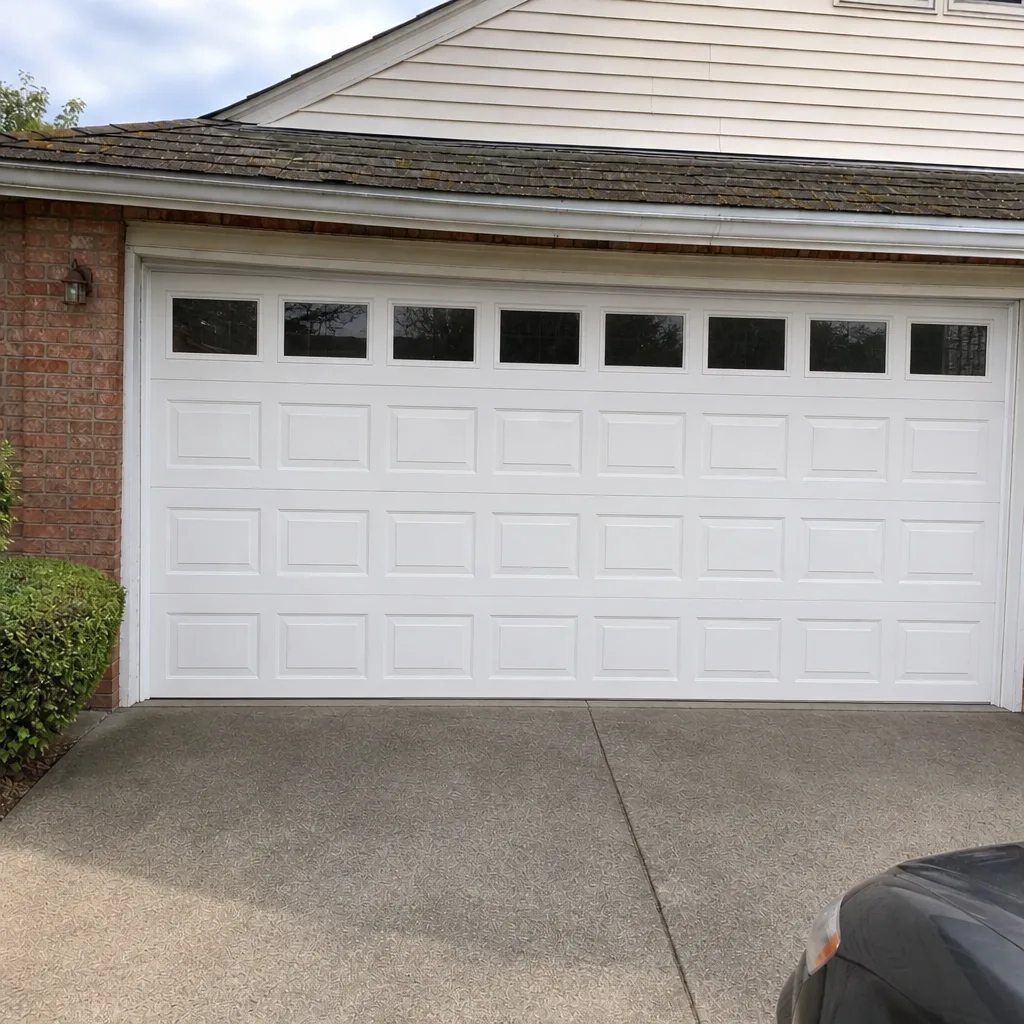 After
When to Call a Professional
Some jobs are for a specialist, not a weekend. Call a professional when a spring snaps or a door suddenly becomes too heavy to lift, when a cable looks slack or kinked, when the door hangs crooked or drops on one side, or when the opener strains or reverses for no clear reason. Those all point to high-tension components where a wrong move can cause injury. Call promptly if a door is stuck open, since that’s a security gap on a shared or street-facing structure. Trying to force a broken door can turn a small repair into a bigger one. Garage Door Repair South Boston offers free estimates in South Boston. Call (844) 662-2561. We answer 24/7. Fast dispatch from 7am to 7pm, Sunday through Friday.
If a new door or a full replacement is the right call, we handle garage door installation as a measured, scheduled project: free measure, a written price agreed before any work starts, and the right door for your space. Our technicians have up to 10 years of experience across the major brands.
Frequently Asked Questions
Check the door’s edge or the opener’s label for a brand and model, and note whether the springs sit on a shaft above the door (torsion) or run along the sides (extension). Knowing the brand and whether the door is sectional, roll-up, or side-sliding tells a technician exactly what to bring before the visit. Call (844) 662-2561 for a free estimate if you’re unsure.
Cold weather stiffens lubricant and can make a worn spring or roller drag, so the door feels heavier even though the mechanism hasn’t changed. If the door is suddenly very heavy or drops on one side, that’s a spring or cable sign to treat seriously and stop operating. Call (844) 662-2561 for an exact quote; estimates are free.
Permit and code requirements vary, so ask the City of Boston’s building department before a major structural change or any change to the opening. A straightforward door replacement often doesn’t need one, but confirm rather than assume. Call (844) 662-2561 and we’ll walk you through what to ask.
It depends on the ownership structure. If the door or structure is common property, the condo association or building owner usually handles it; if it belongs to one unit, that owner does. Check your condo documents or ask the building owner before authorizing any work. Call (844) 662-2561 for a free estimate once you know who’s responsible.
Often yes. Many opener faults trace to sensors, gears, or a worn belt rather than the motor, and both smart-enabled and legacy systems are serviceable. Both LiftMaster/Chamberlain and Genie platforms are covered. Call (844) 662-2561 for an exact quote; estimates are free.
A standard opener hangs from the ceiling and drives the door along a central rail. A side-mount or jackshaft opener mounts on the wall beside the torsion shaft and turns the door from the side, which is the fix for a low-clearance South Boston garage. Call (844) 662-2561 for a free estimate on which fits your space.
The Bottom Line
South Boston garage doors face conditions a generic national guide never accounts for: tight lots and low ceilings that dictate door and opener type, freeze-thaw winters that loosen hardware and split seals, older buildings where ownership isn’t always clear, and enough airborne moisture to reward corrosion-resistant hardware. The practical path is simple. Know the full component map so you can describe the problem, measure your space before choosing any door, confirm who owns a shared structure before spending, and leave spring and cable work to a trained professional. For repairs, parts, a new opener, or a new door across the brands you already own, call (844) 662-2561 for a free estimate. We answer 24/7. Fast dispatch from 7am to 7pm, Sunday through Friday. Visit our Garage Door Repair South Boston page to get started.
Written by the team at Garage Door Repair South Boston.