
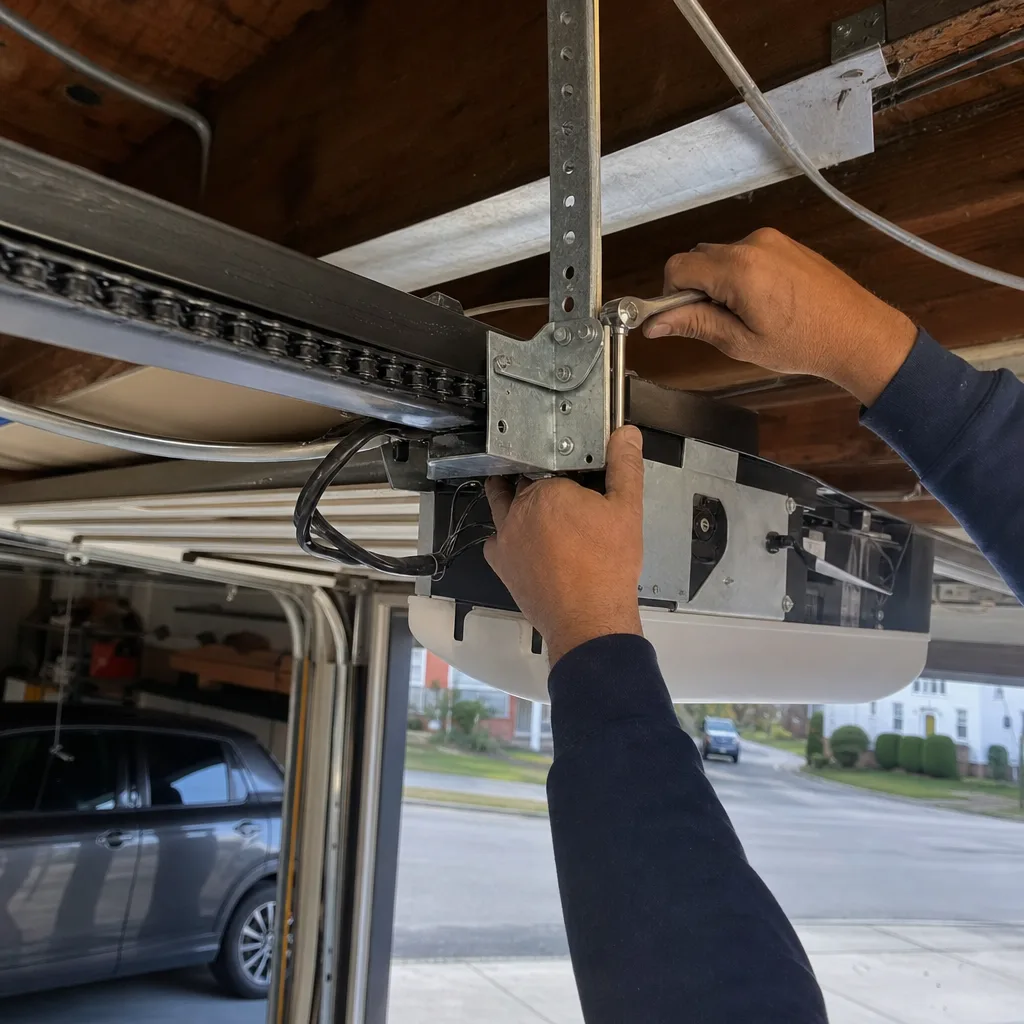
Last updated November 21, 2026
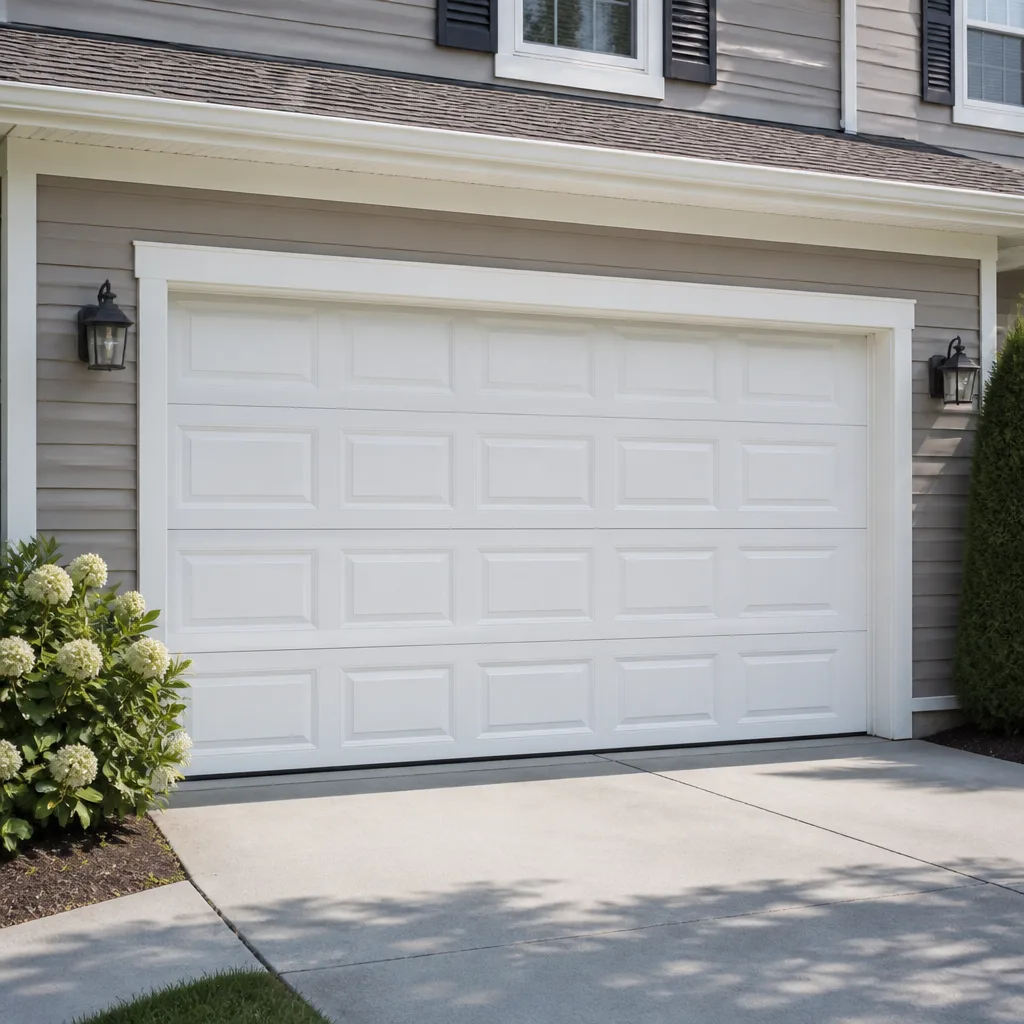 Raised-panel steel
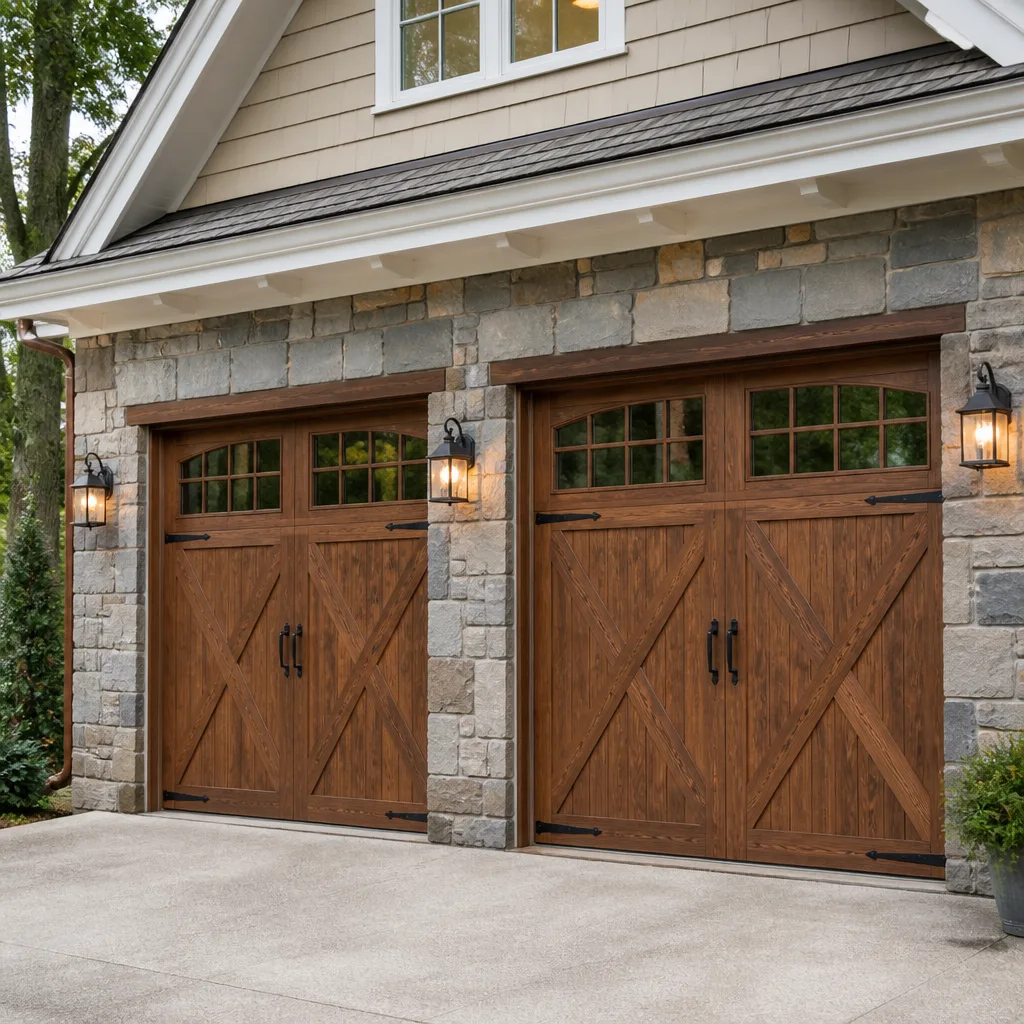 Carriage house
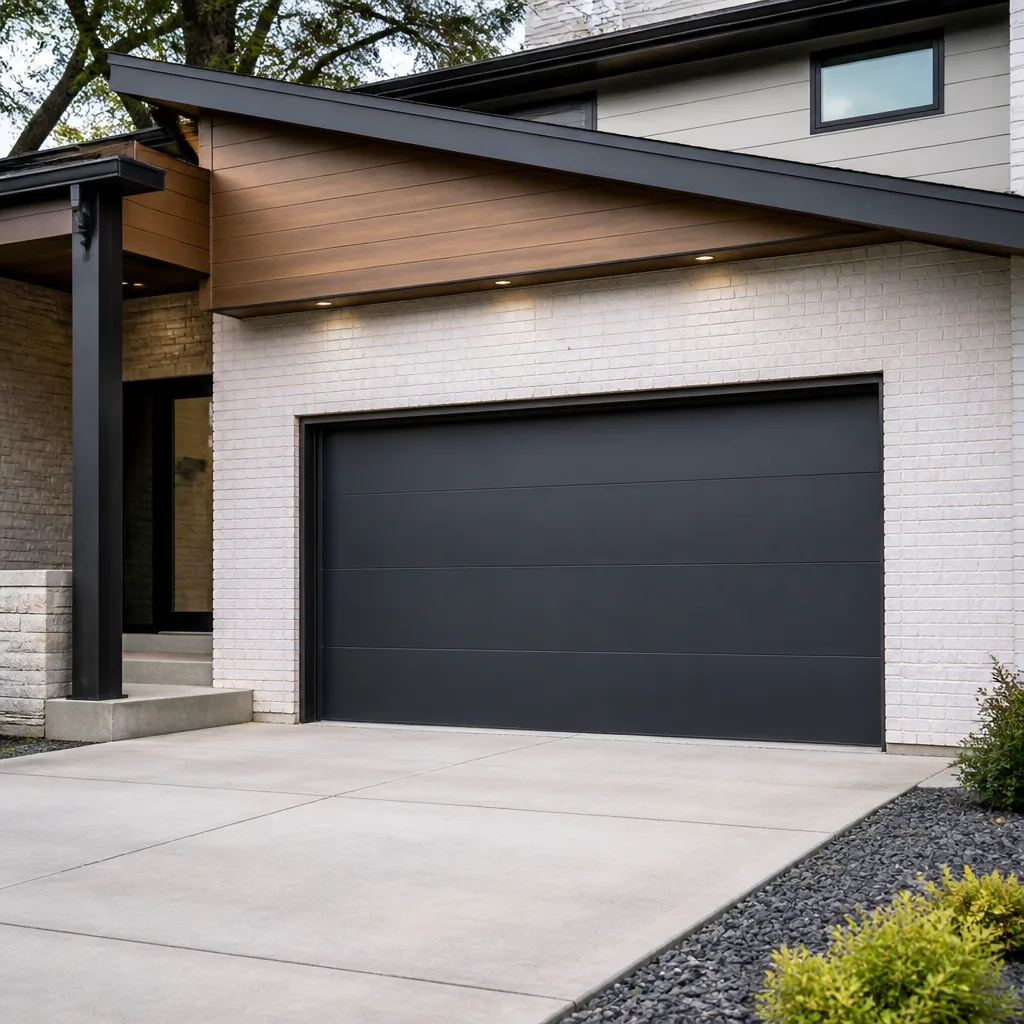 Modern flush
 Full-view glass
 LiftMaster openers
 Chamberlain openers
Full 25-point door and opener safety check with every visit - springs, cables, rollers, tracks, and your LiftMaster or Chamberlain opener included
You get a price before we start. It does not change when the pro arrives.
Get your free estimateGarage Door Permits, Codes & Inspections in South Boston, MA: What You Need to Know
Here’s the misconception we run into most: people assume swapping a garage door is like replacing a light fixture, a cosmetic change with no paperwork attached. In many South Boston cases that’s a costly assumption. A full garage door replacement usually touches the opening, the headroom, the hardware anchoring, and sometimes the framing around a fire-rated wall between an attached garage and the rooms above it. That puts it squarely in permit territory, and the paperwork trail matters later when you sell, refinance, or file a claim. This guide walks through exactly when Boston requires a permit for garage door work, how the Inspectional Services Department (ISD) reviews it, what the state building code says about fire-rated doors, how condo and HOA approval stacks on top, and what happens when unpermitted work surfaces. If you’re searching for straight answers on garage door permit South Boston MA rules, start here.
Quick Answer
In the City of Boston, a full garage door replacement typically requires a building permit through the Inspectional Services Department (ISD), while like-for-like repair of springs, cables, rollers, or an opener swap usually does not. Installation of a new opener is generally handled as an electrical or minor alteration subject to ISD guidance, and any work on the fire-rated wall or door between an attached garage and a living space almost always needs a permit and inspection. Always confirm the specific scope with Boston ISD before work starts; local condo and HOA rules may add another approval layer on top of the municipal one.
Styles & brands we work with
- Raised-panel steel
- Carriage house
- Modern flush
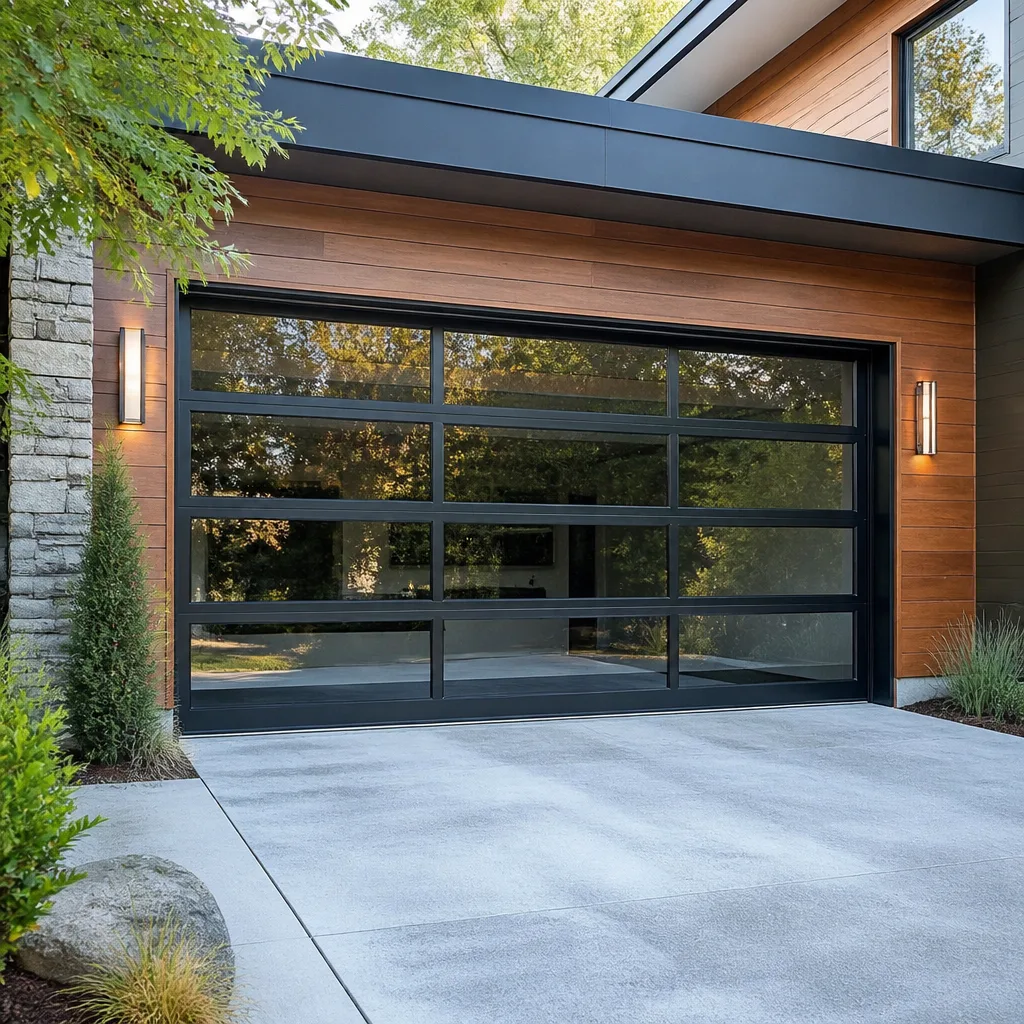
- Full-view glass
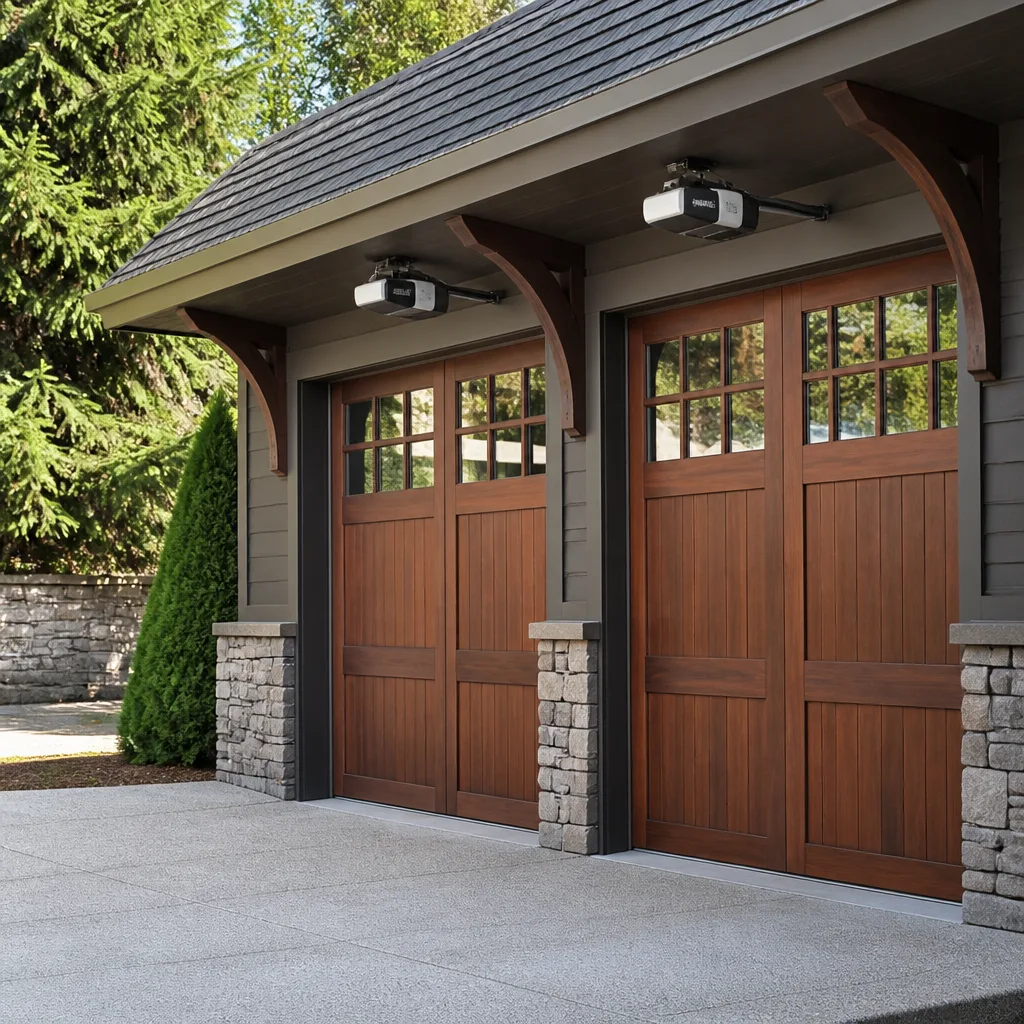
- LiftMaster openers
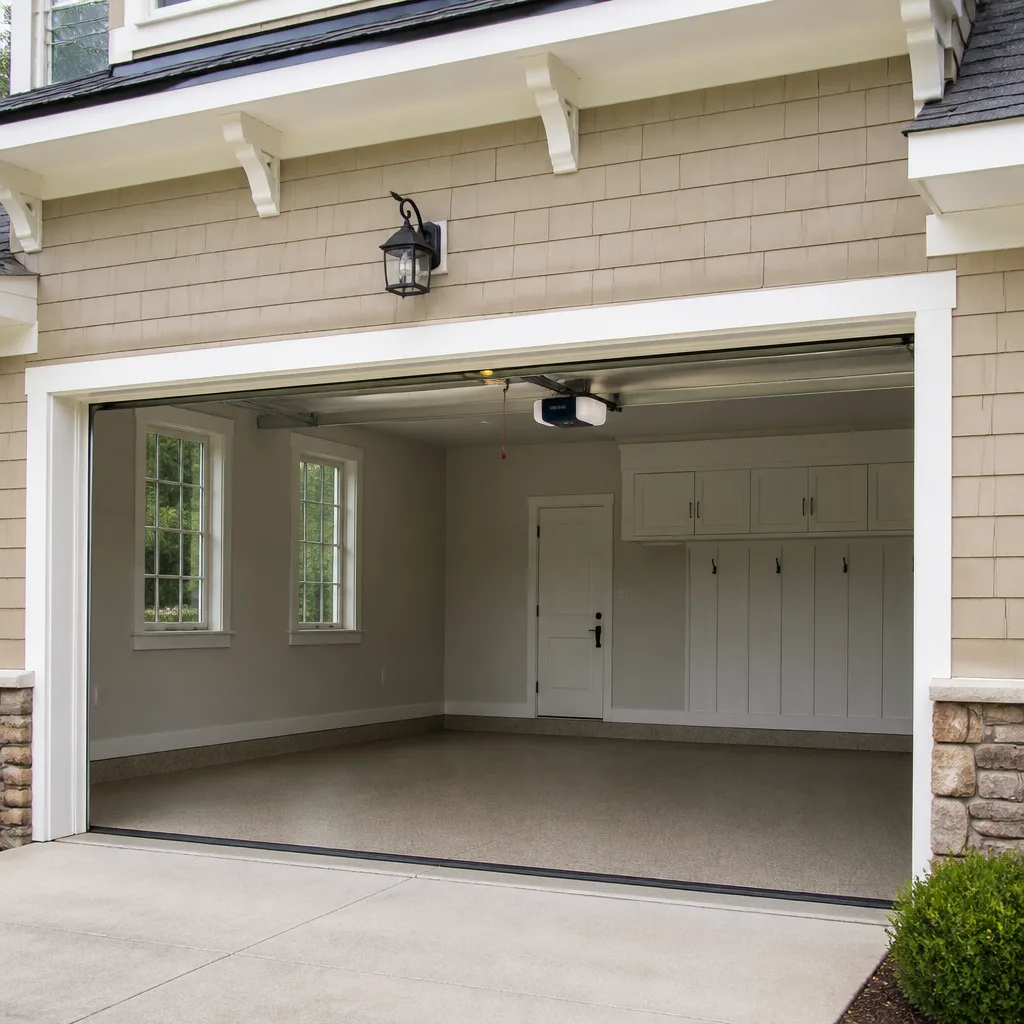
- Chamberlain openers
Table of Contents
- When Does Garage Door Work Require a Permit in South Boston?
- How Boston ISD Handles Garage Door Permits (and Typical Timelines)
- Massachusetts Building Code Basics for Garage Doors
- Fire-Rated Doors Between the Garage and the House
- Condo Associations and HOAs: The Layer Above the City
- What Happens During a Garage Door Inspection
- When Unpermitted Garage Door Work Surfaces
- How to Sequence a Permitted Replacement in South Boston
When Does Garage Door Work Require a Permit in South Boston?
Here’s the clean rule of thumb: the more structural the change, the more likely you need a permit. Repairing or replacing components of an existing door in the same opening is generally considered maintenance. Replacing the entire door with a new model that changes dimensions, weight class, headroom, or the way the door seals against the opening is generally treated as an alteration, and alterations need a permit in Boston. Swapping an opener alone is usually a smaller-scope question with ISD, but the electrical connection often requires a licensed electrician, which is its own permit path.
The distinction matters most in South Boston’s tight housing stock, where a garage door is sometimes the only way a car gets into a mid-block lot or a converted carriage house. Changing a door’s dimensions in those openings can affect setback, egress, and the wall assembly itself. That’s the point where ISD wants to know about it in advance.
Here’s how the work usually breaks down:
- Full door replacement (new panel, new track, new hardware in the same or modified opening): typically requires a building permit through ISD.
- Door swap that changes dimensions, weight, or headroom: typically requires a permit and often triggers a review of the surrounding framing.
- Spring, cable, roller, hinge, or sensor repair on an existing door: generally maintenance, no permit.
- Opener replacement (like-for-like, same wiring): usually no building permit, but confirm with ISD whether the electrical work needs an electrical permit and a licensed electrician.
- New opener on new wiring or a new circuit: electrical permit territory, and we recommend a licensed electrician for the connection.
- Fire-rated door between the garage and living space: almost always permit and inspection required (more on this below).
If you already know the door is a repair, not a replacement, our garage door repair page covers the component-level work that doesn’t run through ISD. For a full replacement, the permit question is part of the conversation from day one.
How Boston ISD Handles Garage Door Permits (and Typical Timelines)
Boston’s Inspectional Services Department issues building permits and performs inspections for residential alterations across the city, including South Boston. The process is the same one that governs kitchen remodels and deck additions: you or your contractor file an application, submit plans and scope, pay the permit fee, and once approved you perform the work in the sequence the permit describes, calling for inspections at the points the permit lists. Final inspection signs it off and closes the permit.
A straightforward like-for-like replacement in the same opening can move through review faster than a change that alters dimensions or framing. Expect the review to take longer if the application involves the fire-rated wall between the garage and living space, structural framing changes, or anything the plan reviewer wants clarified. Timelines shift with ISD’s volume, and we tell homeowners to plan a buffer rather than assume a fixed number of days. Ask ISD directly for the current turnaround for your scope.
A typical sequence looks like this:
- Confirm the scope. Decide whether this is a same-opening replacement, a dimension change, or a repair. That determines whether you file at all.
- File the permit application. Submit the scope, product specifications (door model, weight, track, headroom requirements), and any structural or framing notes. Your installer can supply most of this.
- Pay the permit fee. ISD sets the fee based on the valuation and scope of work.
- Perform the work in permit sequence. Installation happens once the permit is issued; framing or fire-rated wall work is inspected before it’s closed in.
- Call for the final inspection. Rough and final inspections as listed on the permit; the final closes it out.
- Keep the sign-off. Store the closed permit and inspection record with your home paperwork. It’s what proves the work was permitted when a buyer or insurer asks.
South Boston’s building stock makes the plan reviewer’s job specific: many properties sit on narrow lots with limited headroom above the door. If your replacement changes the track radius or the headroom requirement, document that in the application so the reviewer isn’t guessing.
Massachusetts Building Code Basics for Garage Doors
The Massachusetts State Building Code governs how garage doors and the assemblies around them get built and inspected, and the code applies the same way in South Boston as anywhere in the state. The sections most relevant to a garage door project fall into a few buckets: the structural requirements for the door and its anchoring, the fire-separation requirements between the garage and the dwelling, and the safety features required on automatic openers. Rather than quote section numbers from memory, we always tell homeowners to ask their installer and the Boston ISD plan reviewer to point to the exact code section that governs their scope; that way the answer is documented on the permit.
For the door itself, the code cares about the connection between the door and the opening: track anchoring, headroom, and how the door resists wind load. Panels and hardware rated for a specific weight class belong on the door they’re rated for, which is why generic panels and mismatched hardware are a red flag during inspection. Brands like Clopay, Amarr, Chamberlain, and Genie publish specification sheets for exactly this purpose, and keeping those sheets on file makes the permit review and any later inspection more straightforward.
For the opener, the code and the manufacturer’s instructions both call for the safety features that prevent the door from closing on something in its path. That means functioning photo-eye sensors mounted correctly and a working force-reversal setting. An inspection may not test each feature individually, but an opener that’s failed or vandalized sensors is a code problem and a real hazard.
Three things to get on paper before work starts:
- The door model, weight class, and headroom requirements from the manufacturer’s spec sheet.
- The anchoring, track, and framing plan the installer will follow.
- Whether the assembly touches the fire-rated separation between the garage and the house (see the next section).
If you’re still deciding on the door, our garage door installation page explains how brand and model selection interacts with the permit scope.
Fire-Rated Doors Between the Garage and the House
If your garage is attached to the house, the wall between the garage and the living space is a fire separation, and the door in that separation is a fire-rated assembly. That’s a code requirement, not an optional upgrade, and it’s where we see the most expensive mistakes in South Boston homes, especially in conversions and older properties where an ordinary six-panel door got hung in the garage wall decades ago. A garage door that opens between an attached garage and a conditioned room (a laundry, a mudroom, an interior passage) is a different animal from the vehicle door, and it has to be built, rated, and inspected as one.
The rules are straightforward once you know them: the separation has to be maintained with appropriate materials and a door rated for that location, complete with a self-closing mechanism in many applications. If your project touches that separation, your permit scope needs to say so explicitly, and the inspection needs to see it installed as specified. Ask Boston ISD and your installer to point to the exact code section that applies to your assembly, so the answer is documented on the permit rather than inferred later.
Two practical implications for South Boston:
- If you’re replacing only the vehicle door, confirm in writing that the fire-rated interior door and its frame are out of scope and untouched.
- If your project includes any work on that separation, plan for the inspection before the wall is closed. Patching a wall around an uninspected fire door is the situation that turns a small job into a bigger one.
Condo Associations and HOAs: The Layer Above the City
Boston ISD isn’t the only approval you may need. In South Boston condos and many HOA-governed properties, exterior changes to the garage door (color, style, panel design, windows) require written approval from the association or board before you touch the door. That’s a separate rulebook from the building code, and it’s binding on the unit owner regardless of what the city permits. We’ve seen projects stalled by a rejected panel color after the permit was already issued.
The order of operations matters. Get the association’s approval in writing before you file with ISD, because your permit application should reflect the final approved design. If construction drawings come first and the board later changes the color or style, you can wind up amending the permit.
What a typical association approval package asks for:
- A written request describing the change (door replacement, style, color, materials, finish).
- A manufacturer’s spec sheet or door model image so the board can see exactly what’s proposed.
- Confirmation the change matches the common scheme for the building.
- Any conditions the board imposes (matching trim, glass, or opener housing).
- Sign-off in writing, kept on file for the sale and inspection trail.
Some South Boston buildings also have parking structures, shared garages, or deeded bays where a door replacement affects more than one unit. In those cases the board approval and the permit both belong to the same scope of work, and the paperwork needs to match.
What Happens During a Garage Door Inspection
A garage door inspection under a Boston building permit is a check that the installation matches the approved scope and the code requirements. The inspector isn’t there to test your spring tension or listen for a squeak; they’re there to confirm the door and its anchoring are what the permit describes and that the assembly meets the requirements for its location. For a fire-rated separation, they’ll check the door rating and its installation in the frame. For a vehicle door, they’ll check the anchoring, headroom, and that the safety features on the opener work.
In our experience the inspections that pass cleanly are the ones where the installer had the spec sheets, the approved permit, and the fire-rated documentation in hand at the opening. The inspections that get red-tagged typically involve one of a handful of issues: a door of a different weight class or model than the permit specified, an opener’s safety features that aren’t functioning, or fire-rated work that was closed in before the rough inspection.
A quick inspection checklist:
- Approved permit, spec sheets, and approved plans on site.
- Door installed to the model and weight class on the permit.
- Track anchored per manufacturer requirements and headroom as specified.
- Opener installed with functioning photo-eye sensors and force reversal tested.
- Fire-rated door (if in scope) installed per the rated assembly and visible for inspection.
- Final inspection requested and sign-off added to your records.
If the inspection flags a problem, the fix is almost always paperwork or a component match, not a rebuild. The installer handles it and the permit gets re-inspected.
When Unpermitted Garage Door Work Surfaces
Unpermitted garage door work tends to surface at three moments: during a sale, during an insurance claim, and after a neighbor complaint triggers an ISD review. Each has its own path and its own cost, and all three end up requiring the same thing: documentation that the work meets code. If you replaced your door without a permit and a home inspector finds it during a sale, you may be required to retroactively document the work, and that process typically costs more than pulling the permit originally would have.
During a sale, a buyer’s inspector or the buyer’s attorney will flag a newer door against a public permit record that shows no permit. That stalls closing until you either produce documentation or take steps with ISD to address it. During an insurance claim, a carrier reviewing a storm or impact claim on a recently replaced door may ask for the permit record; a missing permit becomes a coverage question. And if a neighbor or a building inspector notices work that doesn’t match the permit record, ISD can require you to submit a permit and bring the work into compliance, sometimes with inspection access that isn’t easy to arrange.
The three scenarios, and what they typically require:
- During a sale. Expect the buyer’s attorney to ask for the permit and inspection record. Without it, you’ll need to take steps with ISD to document or permit the work before closing.
- During an insurance claim. The insurer may ask whether the door was permitted and installed as permitted. If it wasn’t, that’s a coverage question to resolve, not a routine claim.
- After a complaint or inspection. Boston ISD can require the work to be permitted retroactively and inspected. Access and scheduling under a complaint can complicate it.
Retroactive permitting isn’t impossible, but it requires opening up work that was closed in, and the inspection process gets harder once a wall is finished. The practical lesson: pull the permit before the door goes in, not after a buyer asks for it.
How to Sequence a Permitted Replacement in South Boston
Timing is where South Boston projects succeed or stall. The weather cooperates for exterior work in most of the year, which gives you room to sequence properly: association approval first, permit second, door ordered third, install and inspection fourth. The order isn’t arbitrary. Everything downstream depends on the door model being final, and the door model can’t be final until the board has signed off on color and style.
Practical sequencing, in order:
- Confirm the scope and whether a permit is needed. Repair versus replacement sets the path. Ask ISD directly about your specific scope.
- Get the association’s written approval if you’re in a condo or HOA property.
- Choose the door and collect the spec sheet. Weight class, headroom, and track all matter to the permit application.
- File the building permit with ISD. Include the spec sheet, the approved design, and any fire-rated wall scope.
- Order the door once the permit is issued. Lead times vary by brand and model, so confirm before scheduling.
- Install and call the inspection. Final sign-off closes the permit; store it with your home records.
Throughout the process, be careful about who is doing what. On a component repair, the work is ours: our technicians have up to 10 years of experience on the components that don’t involve permits, and the door hardware, spring, and opener work on major brands like Chamberlain, Genie, Clopay, and Amarr is our standard scope. On a permitted replacement, the licensed professional you engage performs the installation, and we can connect you with a local pro who is licensed and insured as their state requires.
Common Mistakes to Avoid
- Assuming a replacement needs no permit because the opening didn’t change. Even a same-opening new door of a different weight class or headroom can trigger a permit. Confirm the scope with ISD before ordering.
- Filing the permit before the association approves the design. If the board changes the color afterward, you’re amending the permit. Get the board’s written sign-off first.
- Closing in the fire-rated wall before the rough inspection. If your scope touches the separation between the garage and the living space, the inspection has to see it before the wall goes back up.
- Installing an opener with sensors that don’t work. Photo-eye sensors and force reversal are code requirements and a real safety issue. An inspection that flags them costs time you don’t need to spend.
- Ordering a door without matching the spec sheet to the permit. A different model or weight class than the permit lists is the most common reason an inspection gets flagged.
- Tossing the inspection record after closing. The permit and the sign-off are documents you’ll need at a sale, a refinance, or an insurance claim. Keep them with your home paperwork.
- Letting a generalist handle the spring or fire-door work. Garage door springs are under extreme tension and require specialist handling; a fire-rated door has to be installed as a rated assembly. Neither is a handyman task.
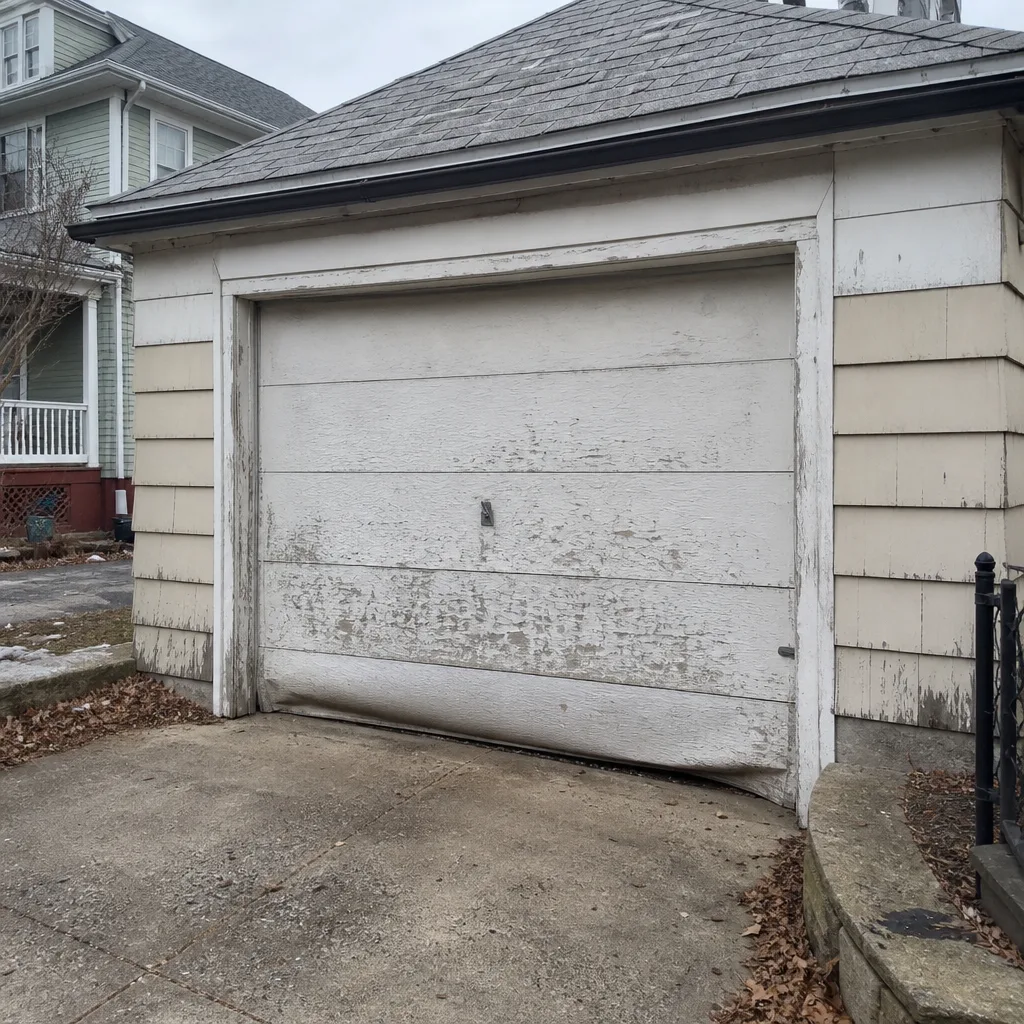
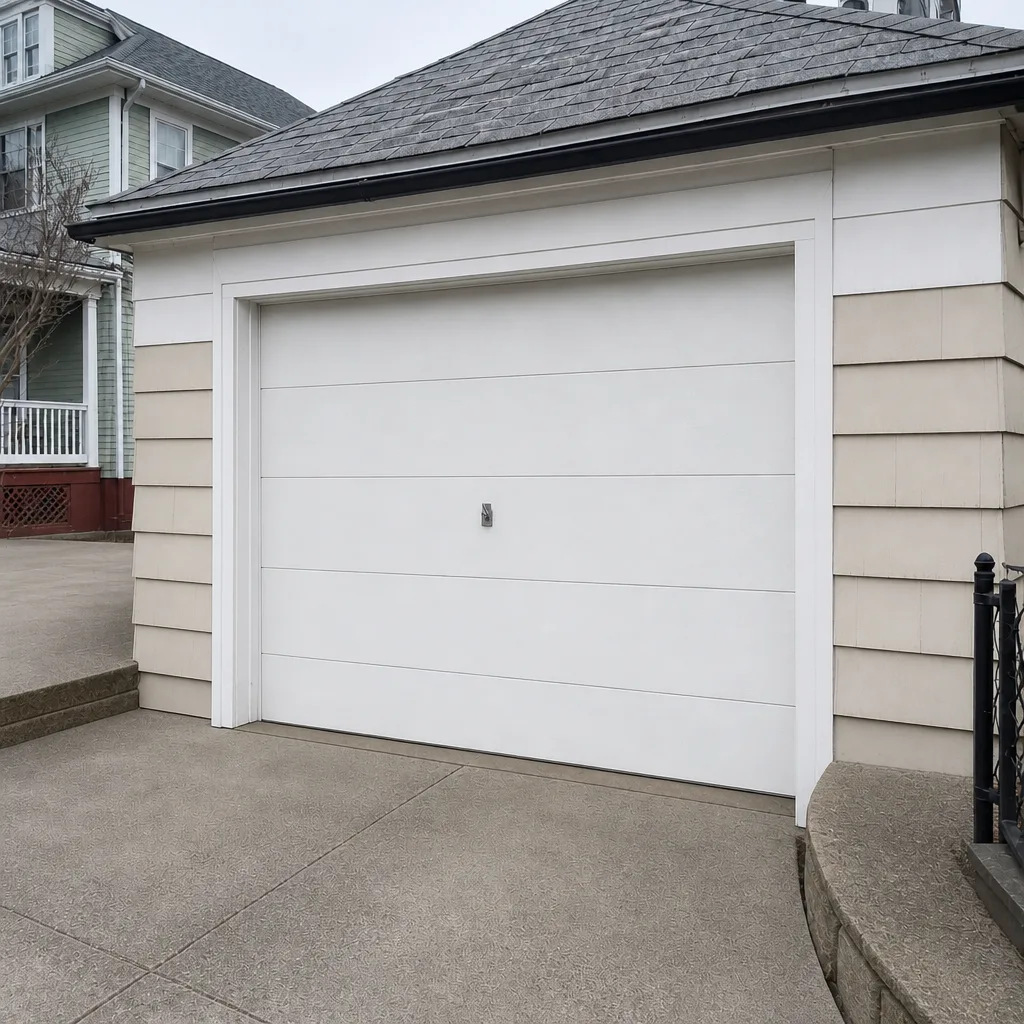
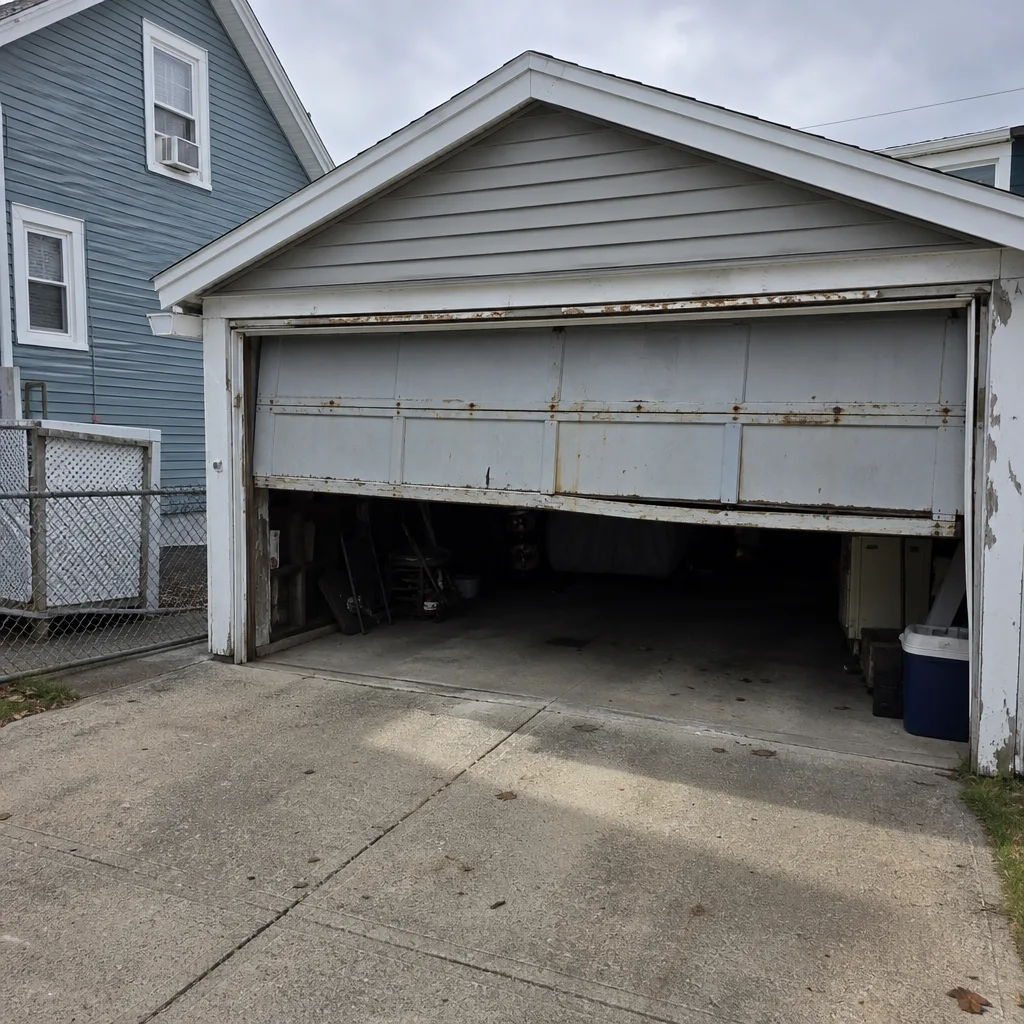
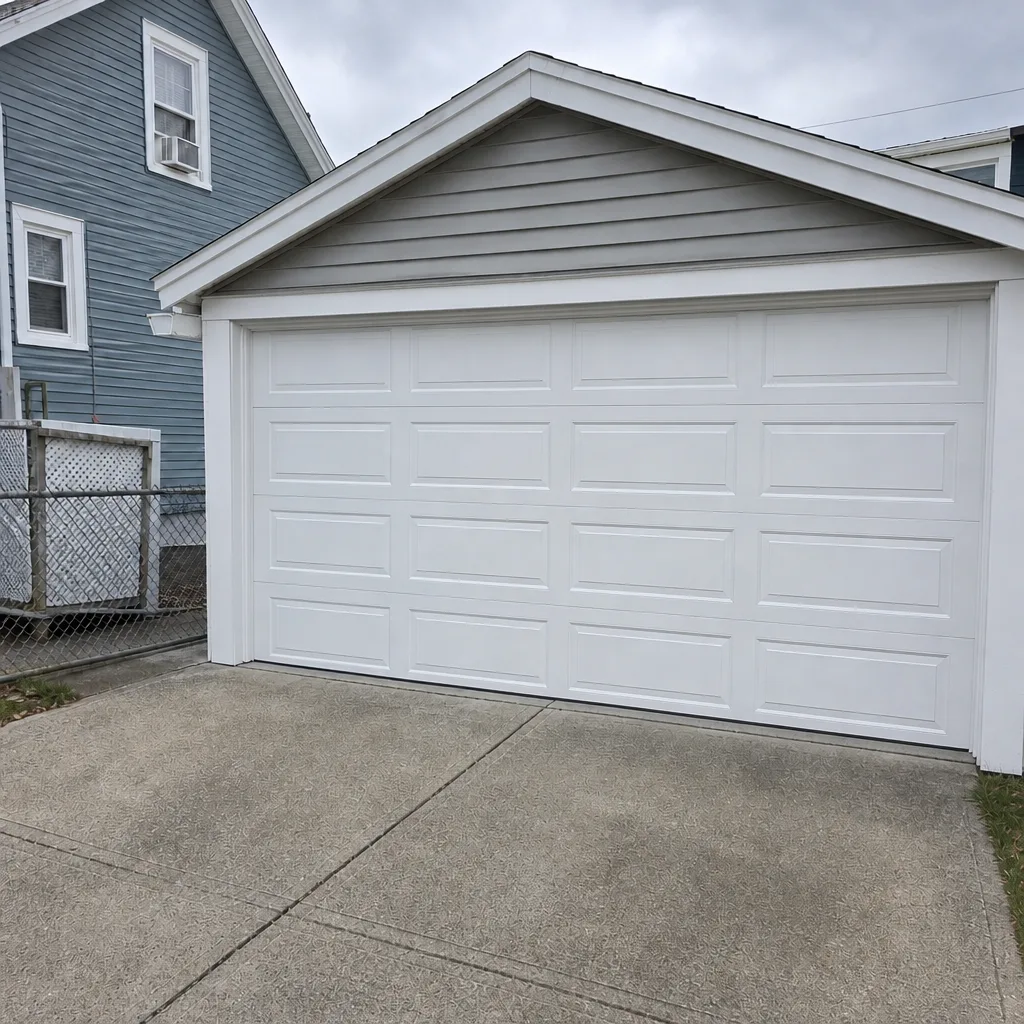
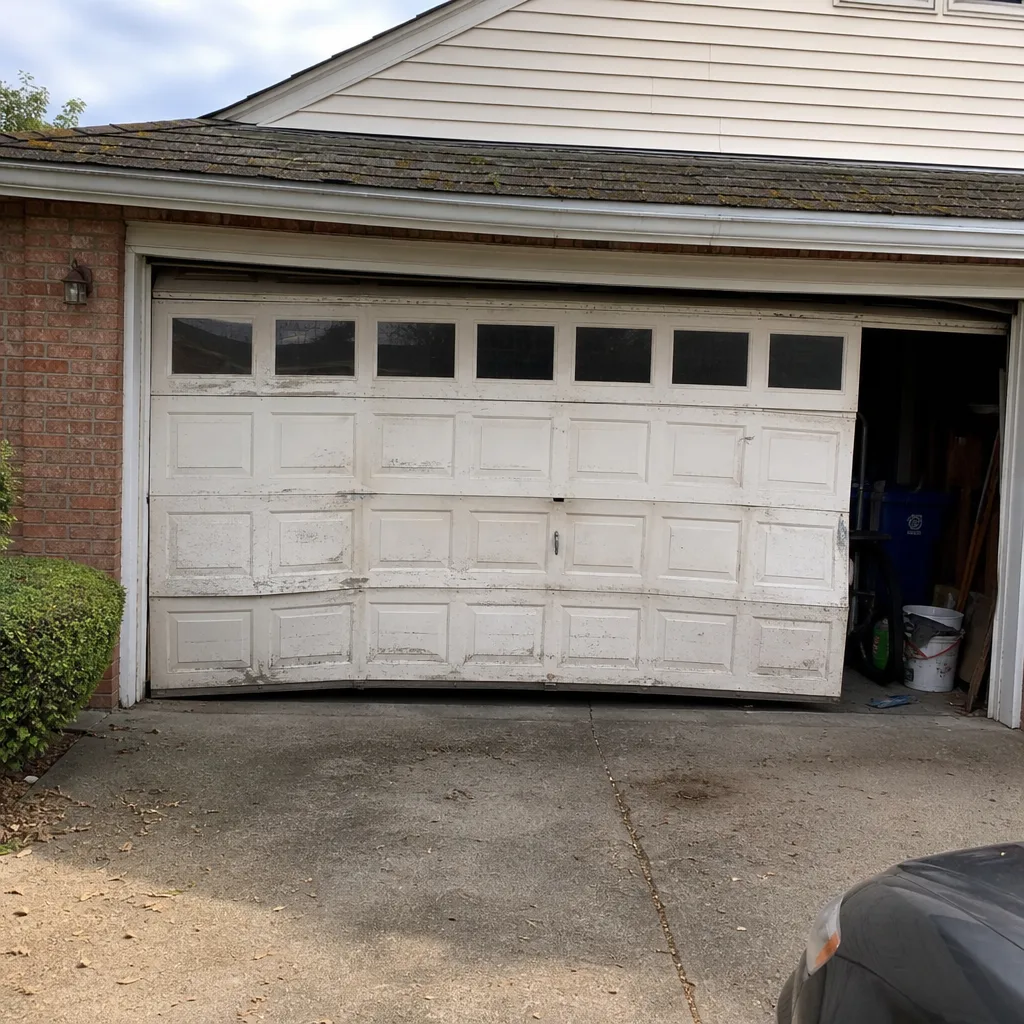
See the difference
 Before
 After
 Before
 After
 Before
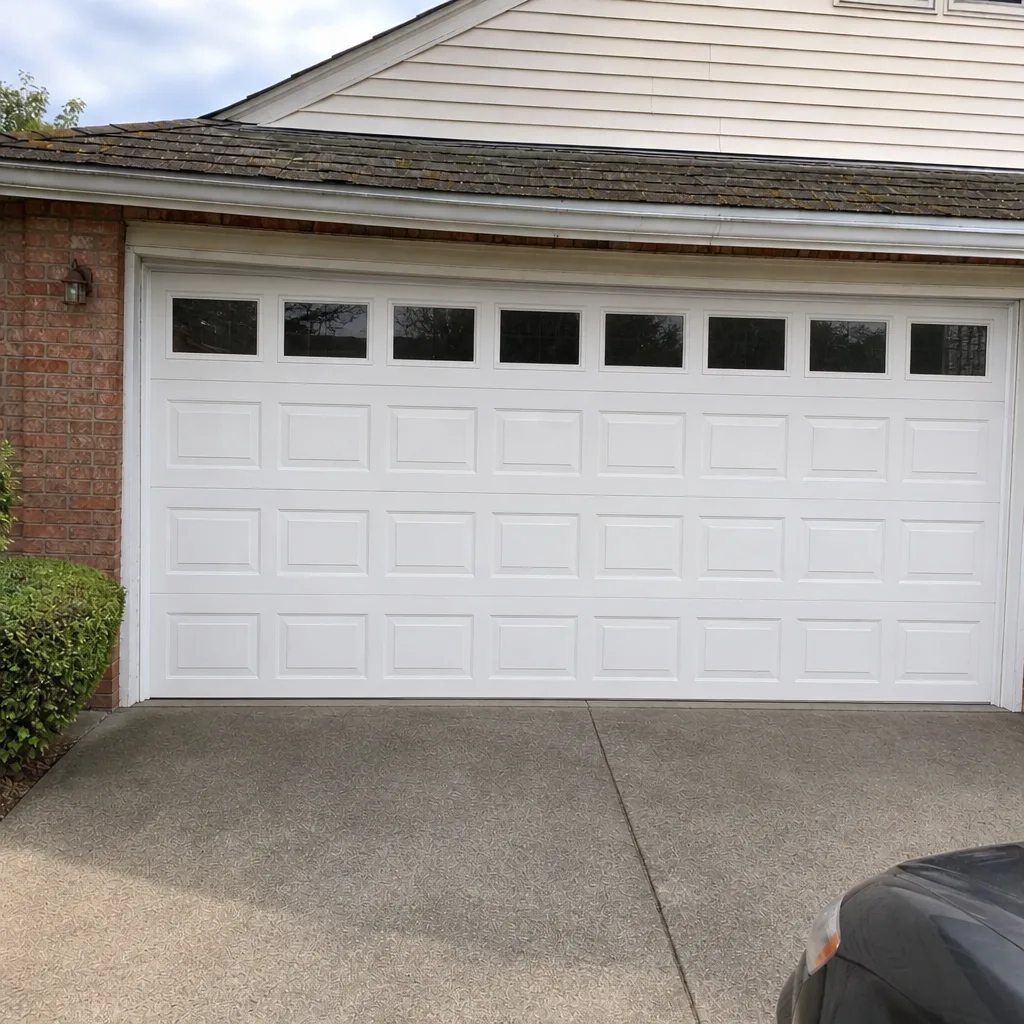 After
When to Call a Professional
Call a professional for anything that touches a spring, cable, or the fire-rated door in your garage, and for the full replacement work that runs through Boston ISD. We say that plainly because the risks are real: a garage door spring stores enough energy to cause serious injury in a fraction of a second, and an incorrectly installed fire-rated door defeats the purpose of the separation. The work you can safely do yourself is limited: checking that the door’s sensors are clean and pointed where they should be, and watching the door cycle to spot a problem. Beyond that, it’s a licensed technician’s job. We also see plenty of situations where the permit question only becomes clear once someone looks at the opening, headroom, and the fire-rated wall. That’s the point to get a professional eyes-on. Garage Door Repair South Boston offers free estimates in South Boston – call (844) 662-2561. We answer 24/7, and we dispatch from 7am to 7pm, Sunday through Friday.
Frequently Asked Questions
You likely do if you’re replacing the entire door with a different model, weight class, or headroom requirement; a full replacement is generally an alteration and requires a building permit through Boston ISD. Repairs to springs, cables, rollers, and most like-for-like opener swaps are generally maintenance and don’t. Confirm your specific scope with ISD before ordering. Call (844) 662-2561 for a free estimate and help confirming what your scope requires.
Timelines vary with ISD’s volume and the scope of your application, so there’s no fixed number we can quote. A like-for-like replacement in the same opening usually reviews faster than a change that alters dimensions or touches the fire-rated wall. The sequence is application, plan review, permit issuance, installation, and final inspection. Ask Boston ISD directly for the current turnaround on your scope. Call (844) 662-2561 if you want help putting the application scope together.
Often yes, if the installation involves new wiring or a new circuit; a like-for-like opener swap reusing existing wiring is usually a smaller question. The rules are ISD’s to state, not ours. We handle the opener work itself on LiftMaster, Chamberlain, Genie, and other major brands; a licensed electrician handles the new electrical connection. Call (844) 662-2561 to talk through your opener install and what the electrical side needs. Estimates are free.
The two approvals have to match, so the order matters: get the association’s written sign-off before you file with ISD, and make the permit application reflect the final approved design. If the board later changes the design, the permit gets amended, which adds time. If the city raises an issue the board hadn’t considered, resolve it before installation. Call (844) 662-2561 for a free estimate once both approvals are in place.
It can. An insurer reviewing a claim on a recently replaced door may ask whether the work was permitted and installed as permitted, and a missing permit turns into a coverage question rather than a routine claim. The fix is to permit the work before installation, or take steps with ISD to document it after the fact. Call (844) 662-2561 if you’re trying to sort out an unpermitted door before a sale or claim.
The local professionals we connect you with are licensed and insured as their state requires, and we check that before a job is scheduled. Our own technicians have up to 10 years of experience on the major door brands and component repair work. For permitted replacement work, the licensed professional performs the installation and files the inspection. Call (844) 662-2561 for a free estimate. We answer 24/7 and dispatch from 7am to 7pm, Sunday through Friday.
The Bottom Line
The permit question comes down to scope. In South Boston, a repair is generally maintenance, a like-for-like component swap is generally fine, and a full replacement usually needs a building permit through Boston ISD. Fire-rated work between the garage and the living space always matters, and condo and HOA approval layers on top. The paperwork trail is what protects you at a sale, an insurance claim, or an inspection; the cost of pulling the permit before the door goes in is almost always smaller than retroactively documenting the work afterward. If you’re unsure about your scope, get the answer before you order the door.
If you’re ready to move forward on a replacement, an opener, or a repair, start with a call. Reach Garage Door Repair South Boston at (844) 662-2561 for a free estimate. We answer 24/7, and fast dispatch is available from 7am to 7pm, Sunday through Friday. Whether you’re mapping out a permitted replacement or replacing a spring on a brand-name door, our team can tell you what your scope involves and where the permit and inspection process fits in. For background reading before the call, our Garage Door Repair South Boston page covers the full range of services, and our garage door opener repair page is the place to start if an opener is what’s failing.
Written by the team at Garage Door Repair South Boston.