
Last updated November 21, 2026
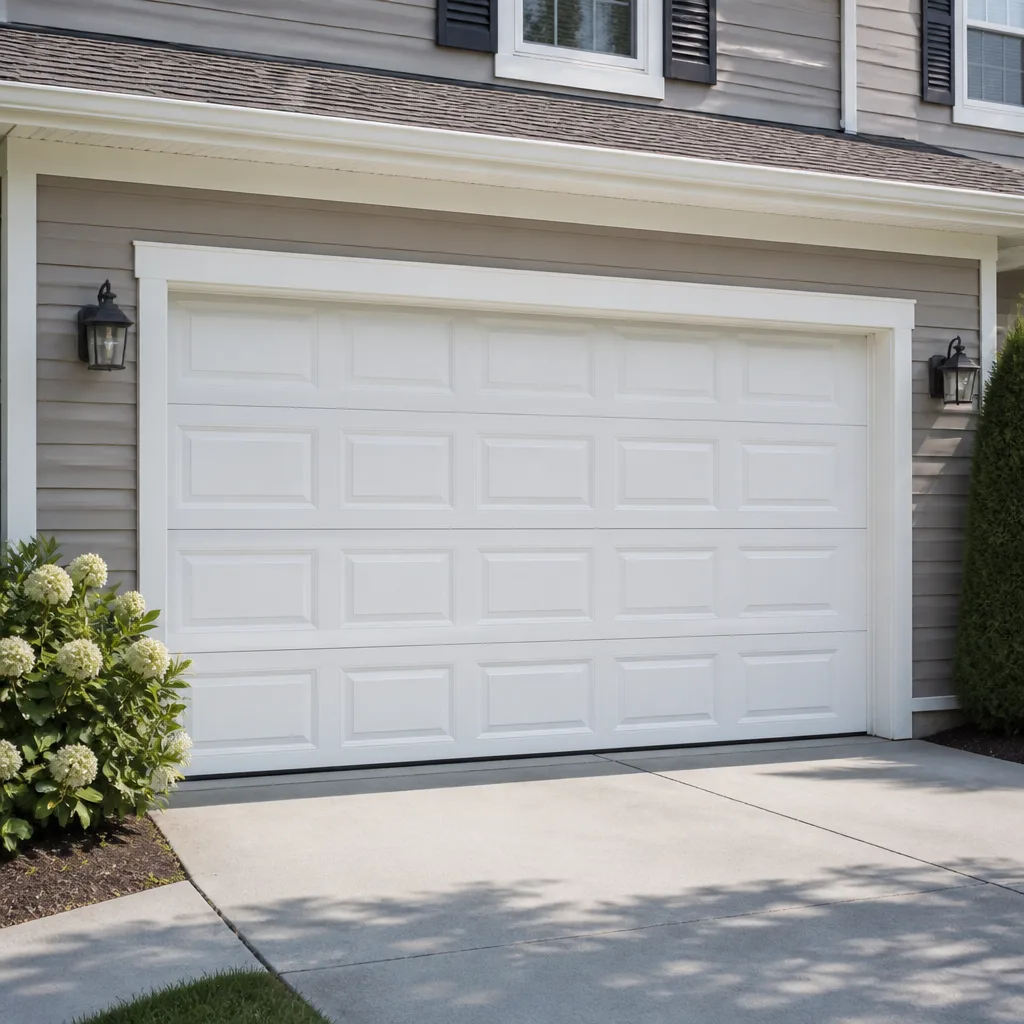 Raised-panel steel
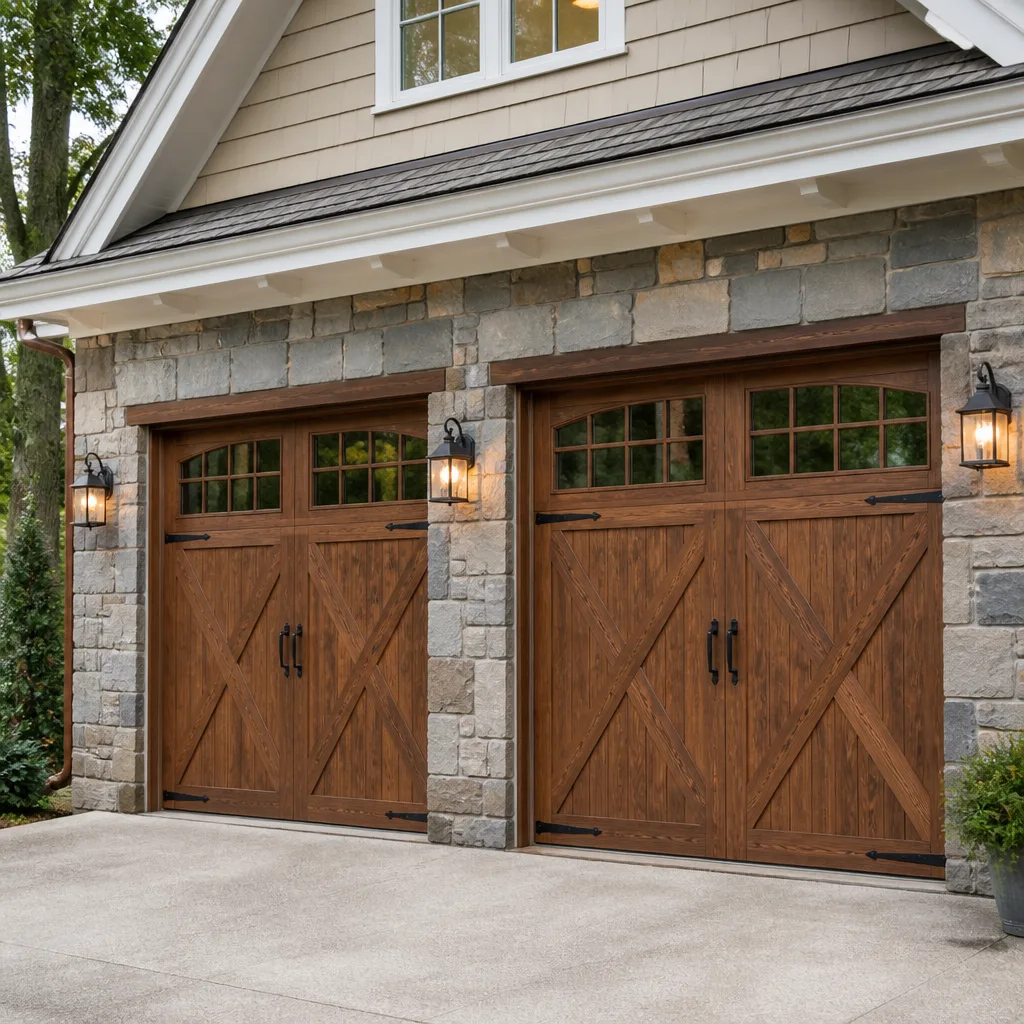 Carriage house
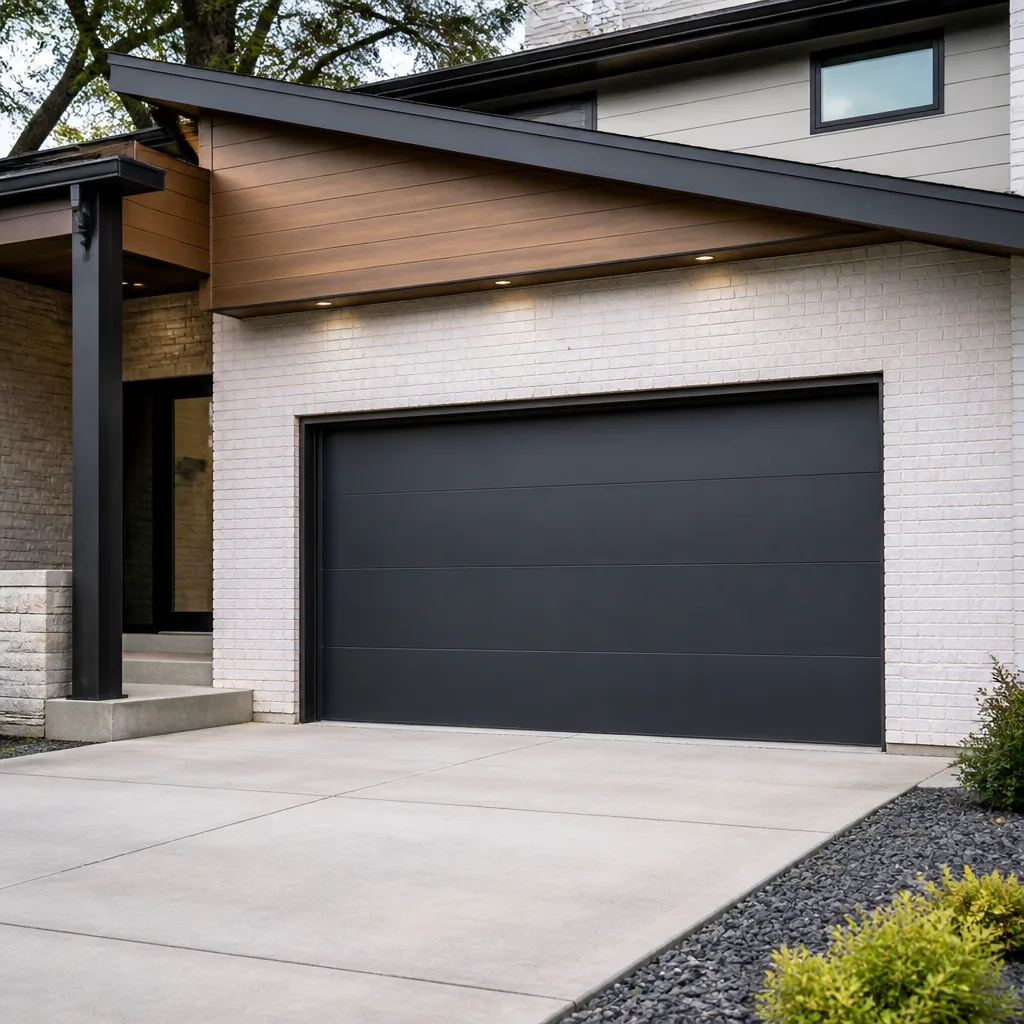 Modern flush
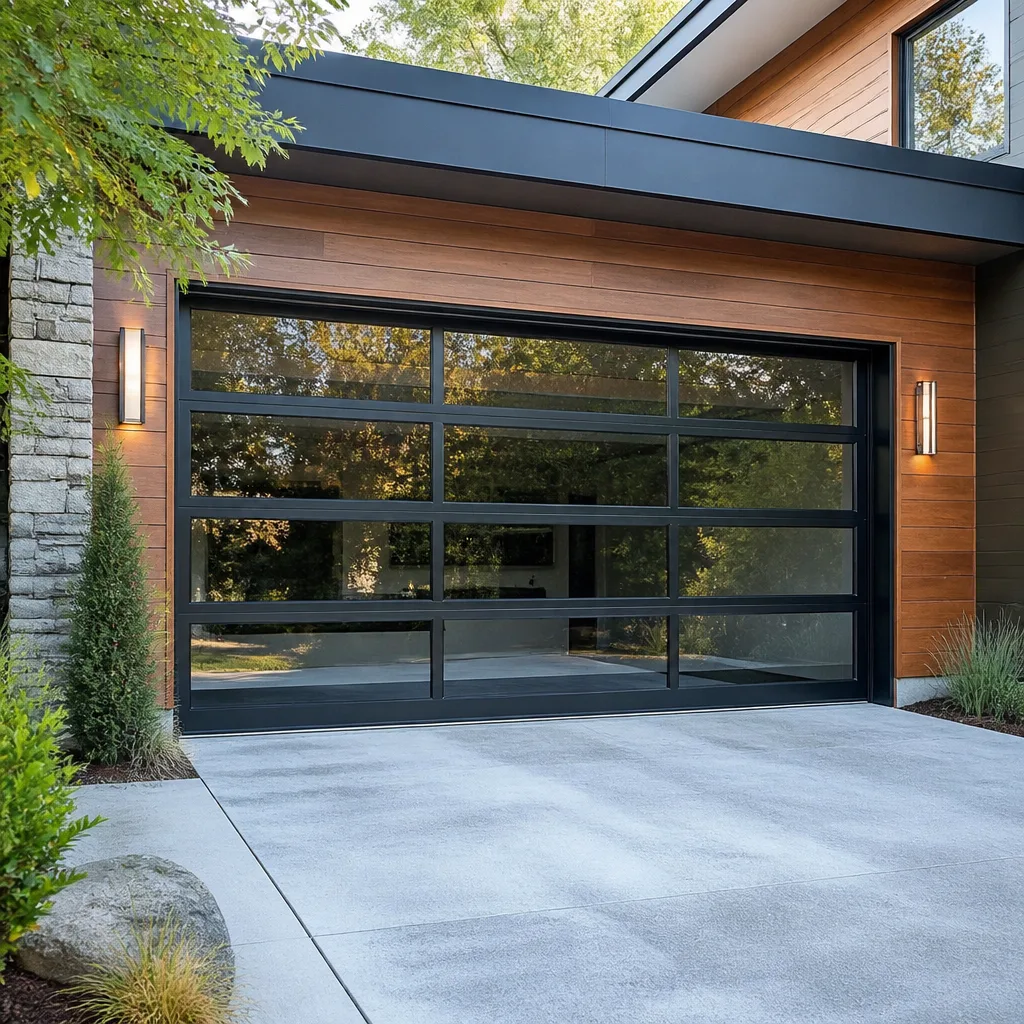 Full-view glass
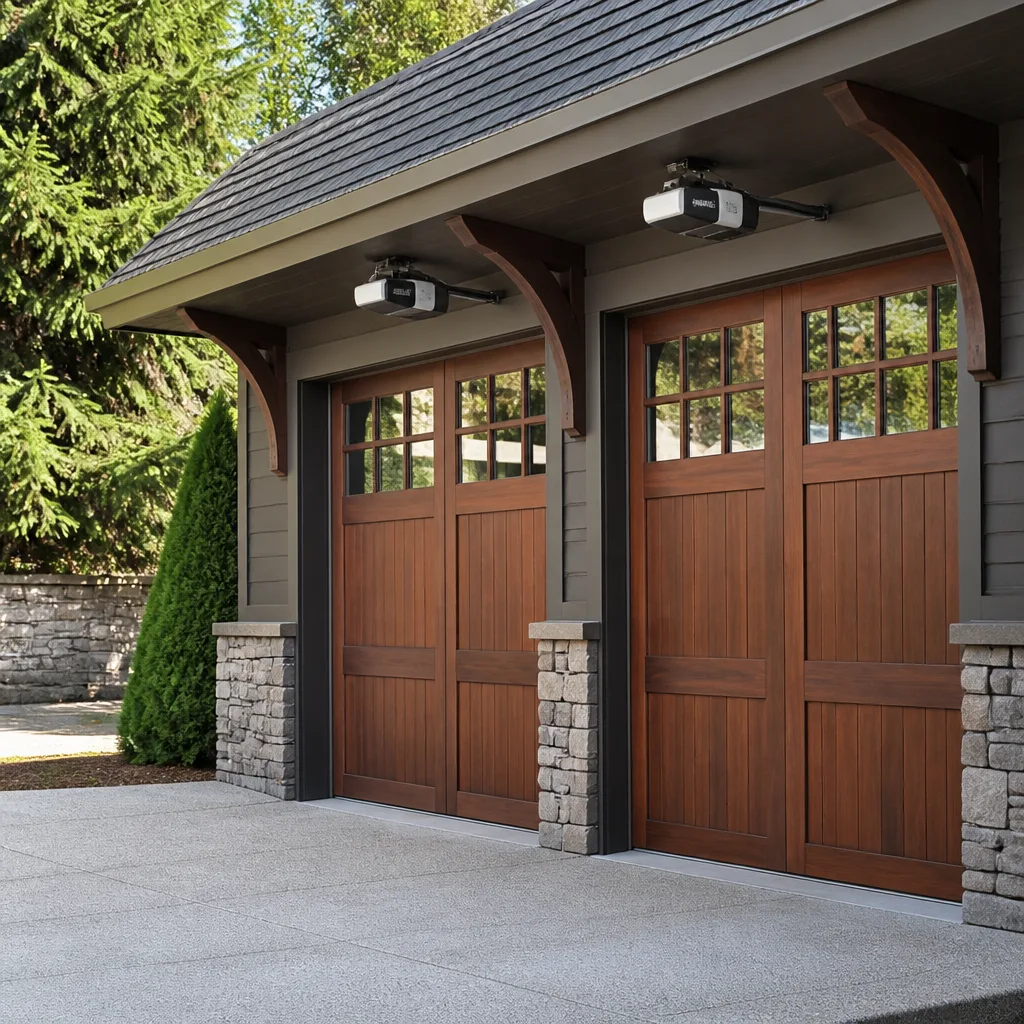 LiftMaster openers
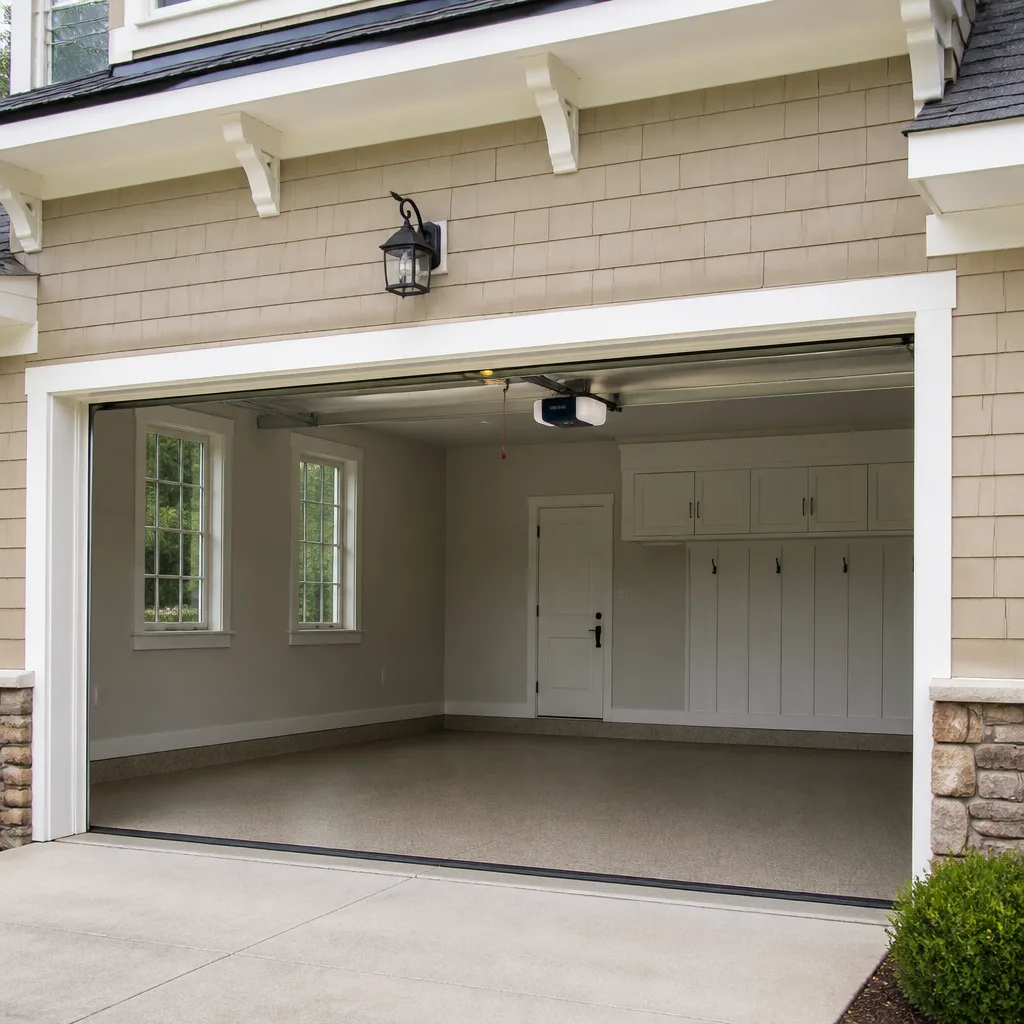 Chamberlain openers
Full 25-point door and opener safety check with every visit - springs, cables, rollers, tracks, and your LiftMaster or Chamberlain opener included
You get a price before we start. It does not change when the pro arrives.
Get your free estimateSeasonal Garage Door Care for South Boston: Year-Round Homeowner’s Guide
A garage door that runs perfectly in September can be frozen shut, out of balance, and running a strained opener motor by February. Not because anything broke on its own, but because nothing was done in the fall. That’s the part most care checklists get wrong. They hand you a generic list of monthly chores that fits a mild climate and skip the hard truth about living here: South Boston subjects a garage door to four distinct stress regimes across a single year. Freeze-thaw cycles, road salt drifting onto the bottom seal, summer UV on a south-facing panel, and a spring that quietly loses tension through it all. This guide maps each specific care action to the specific seasonal threat, so you can tell the difference between something you can safely check and something that needs a trained technician.
Quick Answer
The core answer: Garage door care in South Boston should be scheduled around the seasons, not done as a single annual task. Fall is for prepping the bottom seal, switching to low-temperature grease, and checking cable tension before thermal contraction sets in. Winter is for watching and listening, never touching springs. Spring is the highest-failure season and needs a post-frost inspection. Summer is for monitoring UV damage to seals and south-facing panels. Every one of these seasonal windows has a safe homeowner check and a point where a trained technician takes over.
Styles & brands we work with
- Raised-panel steel
- Carriage house
- Modern flush
- Full-view glass
- LiftMaster openers
- Chamberlain openers
Table of Contents
- Why South Boston Puts a Door Through Four Stress Regimes
- Fall Prep: Getting Ahead of the First Freeze
- Winter: What Freeze-Thaw Does to Your Springs
- Spring: The Highest-Failure Season and the Three Post-Frost Checks
- Summer: UV, South-Facing Garages, and When to Act
- The Salt-Air Variable and What Actually Resists It
- Seasonal Care for Your Opener and Its Brand
- Common Mistakes to Avoid
Why South Boston Puts a Door Through Four Stress Regimes
South Boston sits in a climate with real seasonal swing, and that swing acts on a garage door more than most homeowners realize. The door isn’t a static slab. It’s a mechanical system with springs under tension, cables bearing load, rollers tracking in and out of a curve, and a bottom seal sitting inches off a concrete slab that gets wet, dries, freezes, and thaws. Each season loads a different part of that system, and each season exposes whatever the previous one left weak.
Think about what a torsion spring actually does. It carries the weight of the door so the opener doesn’t have to. When the temperature drops, steel contracts. When it warms, it expands. Over a full year of that, the spring doesn’t fail from one event – it fails from accumulated fatigue that a cold snap can finally push over the edge. That’s why the timing of care matters as much as the care itself.
What makes this local and specific is the combination. You have a full four-season climate, you have road salt that ends up near the bottom seal and the lower tracks through the winter, and you have south-facing garages that sit in direct summer sun for hours. A guide written for a mild climate misses all three. This one is built around them.
The three seasonal forces at work, and what each targets:
- Thermal contraction (winter): stresses springs, cables, and the metal track alignment.
- Freeze-thaw moisture (winter into spring): attacks the bottom seal and encourages the door to stick to the slab.
- UV radiation (summer): breaks down rubber seals and dulls or cracks painted panels, worst on a south-facing door.
- Road salt (all winter, lingering after): creeps onto lower tracks, hinges, and the seal and accelerates corrosion on any unprotected metal.
Read that list against your own garage and you’ll start to see which checks matter most for your door. A south-facing door with an older rubber seal has a different priority order than a shaded door in a newer build. The seasonal sections below take you through each one in turn, starting with the most important prep window of the year: fall.
Fall Prep: Getting Ahead of the First Freeze
Fall is the most valuable maintenance window on the calendar, and it’s the one most homeowners skip. Everything you do before the first hard freeze reduces the odds of a winter problem and makes the spring inspection lighter. The goal is simple: get the door into its best possible condition before cold starts asking it to do more.
Three things matter most in fall, and the first two are safe for you to handle.
- Treat the bottom seal area before the salt arrives. Clean the rubber seal and the concrete lip it meets, then check that the seal is pliable and making contact. A stiff, cracked seal lets cold air and moisture in and lets road salt sit against the slab. If it’s already stiff or torn, replacing it before winter is far easier than dealing with a door frozen to the floor.
- Switch to a low-temperature lubricant before the first freeze. Ordinary grease thickens in cold weather and can make rollers and hinges stiff. A low-temperature lubricant on the hinges, rollers, and tracks keeps things moving when the thermometer drops. Apply it in the fall, not the middle of winter, so it’s already working when it’s needed most.
- Check cable tension – but only visually and only from a safe distance. Look for cables that are visibly slack, frayed, or sitting unevenly on a drum. Do not touch, adjust, or attempt to re-seat a cable. Cables carry the full load of the door, and a cable under tension can cause serious injury if handled wrong. If something looks off, that’s a call to a technician, not a project.
While you’re out there, run the door by hand with the opener disconnected and listen. A door that’s balanced well should lift and lower smoothly and stay put when you let go around the halfway point. A door that wants to drop or lift on its own is telling you the spring balance is off, and you want to know that before winter, not after.
If you need a spring or a hinge looked at, our garage door repair service can handle it as a single visit. Getting ahead of this in fall is what makes winter quiet.
Winter: What Freeze-Thaw Does to Your Springs
Here’s the counterintuitive part of winter care: the safest thing a homeowner can do for a garage door in South Boston during the winter is mostly leave the springs alone and learn to read the symptoms. Cold affects torsion spring tension directly, and freeze-thaw cycles repeat that stress over and over. Your job in winter is observation, not intervention.
When the temperature drops, torsion springs and the cables they work with are under different load than in summer. A spring that was balanced in October can feel out of balance in January. That doesn’t always mean it’s failing – but it means the door is doing more work than it should, which wears the opener and speeds up fatigue on the spring itself.
Safe things to watch for (all from a distance, no touching springs or cables):
- Sounding different. A groan, a bang at the end of travel, or a door that suddenly drops faster than it used to can all point to a spring losing tension.
- Balance checks. Disconnect the opener and lift the door by hand partway. If it won’t stay put, the balance is off.
- A gap in the middle when the door is closed. If the door no longer meets the floor evenly, a spring or a track has moved.
- A door sticking to the floor. When a door freezes to the slab, the opener is now trying to break a bond – it strains the motor and the lift mechanism.
What you should not do: don’t try to adjust a spring, don’t try to tighten a cable, and don’t spray a lubricant into a spring assembly. Springs are under extreme tension. A trained technician with the right tools handles this safely; a homeowner with household tools can be seriously hurt. This is exactly the kind of work our specialists do as a standard service, not a reluctant add-on.
If your door is sticking, struggling, or noisy in winter, that’s the point to call a technician and have it looked at before it gets worse. A spring that fails fully is far less convenient than one fixed while it’s still working, and it takes pressure off the opener too. If the opener itself is also straining, our garage door opener repair covers both smart-enabled and legacy units.
Spring: The Highest-Failure Season and the Three Post-Frost Checks
Spring is the highest-failure season for garage doors in South Boston, and there’s a mechanical reason for it. Everything the winter loaded up – the springs, the cables, the seals – goes through the final freeze-thaw stretch and then gets tested by repeated use as people start moving again. A spring that was quietly losing strength since fall often gives out in this window. The good news is that three simple checks right after the last hard frost catch most of the problems before they become full failures.
Do these three checks after the last hard frost:
- Do the balance test. Disconnect the opener, lift the door by hand to about halfway, and let go. If it holds its position, the balance is good. If it drops or rises on its own, the spring is no longer carrying its share and needs professional attention.
- Inspect the bottom seal and the concrete lip. Winter and salt take a toll on the rubber. Look for cracks, stiffness, or a seal that no longer meets the floor. A worn seal lets water and salt back in and can freeze to the door again next winter.
- Look at the cables, tracks, and rollers – from a distance only. Cables should sit evenly and not look frayed. Tracks should be straight and aligned. Rollers should turn freely. If a cable looks tired or a track is bent, that’s a technician call, not a DIY fix. Cables and springs are load-bearing and should be handled only by someone trained to do it safely.
While you’re checking, walk around the door and look at the panel edges, the hinges, and the lower track where salt has been sitting. Any corrosion you find in spring is easier to stop now than in another season of use. If your door is old enough that the seal and hardware are both wearing, our garage door installation covers new Clopay and Amarr doors when repair stops making sense.
Spring is also the natural time to book a full inspection if your door has been noisy or off-balance all winter. Give the whole system a trained set of eyes right after the frost and you go into summer with a door that’s doing what it should.
Summer: UV, South-Facing Garages, and When to Act
Summer looks like the easy season for a garage door, but it carries a specific threat: UV radiation, concentrated on any door that faces south. A south-facing door in South Boston takes direct sun for hours, and that does two things over time – it dries out and cracks rubber seals, and it fades and eventually micro-cracks painted steel panels. Both are slow, so the trick is knowing when to act and when to just monitor.
Act now (replace or repair):
- A bottom seal that’s dry, cracked, or brittle to the touch. UV damage is cumulative and a cracked seal lets in water and pests.
- Hinge or roller lubricant that’s dried out from heat. Re-apply with a low-temperature-safe lubricant to keep things moving.
- Paint that’s flaking or panels showing rust spots. Stopping rust early is far cheaper than letting it spread across a panel.
Monitor (watch, don’t act):
- Slow paint fade on a south-facing door. Cosmetic fade isn’t a failure, but keep an eye on whether it turns into cracking.
- Slight noise changes as the door heats and expands. Some is normal as metal warms through the day.
- The seal’s appearance if it’s still pliable. If it bends rather than cracks, it’s holding up.
The other summer issue is heat on the opener motor. An opener working harder because the door is out of balance gets hotter, and a hot, overworked opener fails faster. If your opener is straining in the summer heat, it’s a sign the door balance is off or the opener needs service. Summer is also a good time to check the safety reverse: put a small object in the door’s path and confirm the door reverses. If it doesn’t, that’s a safety issue to fix before anything else.
The Salt-Air Variable and What Actually Resists It
Road salt is the seasonal threat most general care guides miss, and in South Boston it adds a stressor that inland checklists don’t account for. Plowed roads and salted driveways send fine salt spray and grit toward the lower parts of the door through the winter, and it lingers on the bottom seal, the lower tracks, the hinges, and the hardware long after the snow’s gone. Salt doesn’t just cause visible rust – it accelerates corrosion on any unprotected metal and stiffens rubber seals.
What actually helps, in practical terms:
- A low-temperature grease or a salt-resistant lubricant on the moving metal parts. Standard grease thickens in cold and doesn’t resist salt; a lubricant designed for both cold and corrosion does a better job of keeping hinges and rollers moving through the winter.
- A protective coating on painted lower panels and hardware. A coating that seals the paint and metal slows salt from attacking it. Re-apply before winter, and touch up any scratches so salt doesn’t get a start.
- Regular cleaning of the lower tracks and seal. Rinse the lower tracks and the seal after spells of heavy road salt. A quick wipe of the salt residue and grit away keeps it from grinding into the moving parts.
The bottom line on salt: protect the metal, keep the moving parts coated, and clean the salt off regularly rather than waiting for spring. If your hardware is already showing significant corrosion, replacing the hinges and lower rollers is a repair we can handle as part of a single visit. When the time comes for a new door, a Clopay or Amarr door with a finish and seal built for this kind of exposure makes the seasonal fight easier.
Seasonal Care for Your Opener and Its Brand
Your opener works harder in every hard season, and knowing your brand makes the seasonal care faster and the diagnosis more accurate. Garage Door Repair South Boston is factory-familiar with eight of the industry’s leading brands – LiftMaster, Chamberlain, Genie, Clopay, Amarr, Wayne Dalton, Craftsman, and Raynor – so whether you have a Wi-Fi-enabled LiftMaster or Chamberlain unit or a legacy Genie system, we know the specific parts and behavior to check. That’s the difference between a seasonal inspection that catches a problem and one that guesses at it.
Seasonal opener checklist:
- Fall: test the safety reverse, check that the opener isn’t straining, and confirm the light and remote are working before winter use.
- Winter: listen for extra strain when the door is cold. If the opener is fighting a door frozen to the floor or an off-balance spring, it’s overtaxed and worth having looked at.
- Spring: after the frost, run a full cycle and check the safety reverse again. A door that’s been through winter can develop an opener problem that only shows up on a full lift.
- Summer: check for a hot motor and any change in reversing behavior. Heat and an off-balance door both stress the unit.
If your opener is failing or your smart opener keeps disconnecting, our garage door opener repair covers both the Wi-Fi and legacy platforms, and because we carry parts, the right component usually goes on during the first visit rather than waiting on a supplier. Knowing your brand means we repair the system you already own, not a generic guess. For the full picture of everything we handle – from Garage Door Repair South Boston through repair, opener work, installation, or Garage Door Repair South Boston parts – all of it comes from a single trade focus: 100% garage doors.
Common Mistakes to Avoid
- Doing the season’s maintenance in the wrong season. Greasing the hinges in a January thaw or checking balance in July misses the point. Match the task to the season so the work you do actually protects the door when it matters.
- Using ordinary grease in fall. Standard grease thickens in cold and doesn’t resist the salt that comes with a South Boston winter. Use a low-temperature, salt-resistant lubricant before the first freeze.
- Touching a spring or a cable to “check” it. These parts carry the full weight of the door and are under extreme tension. Observe from a distance; let a trained technician handle the rest.
- Ignoring a door that sticks to the floor in winter. When a door freezes to the slab, the opener is doing the work of freeing it. That strain is a warning that something needs attention.
- Skipping the post-frost check in spring. Spring is the highest-failure season, and the three post-frost checks catch most of the problems winter left behind.
- Letting salt sit on the lower tracks and seal all winter. Salt residue grinds into moving parts and stiffens the seal. Clean the lower tracks and seal regularly, not just in spring.
- Letting a south-facing seal dry out. UV damage on a sunny door is cumulative. Replace a cracked, brittle seal rather than waiting for it to fail.
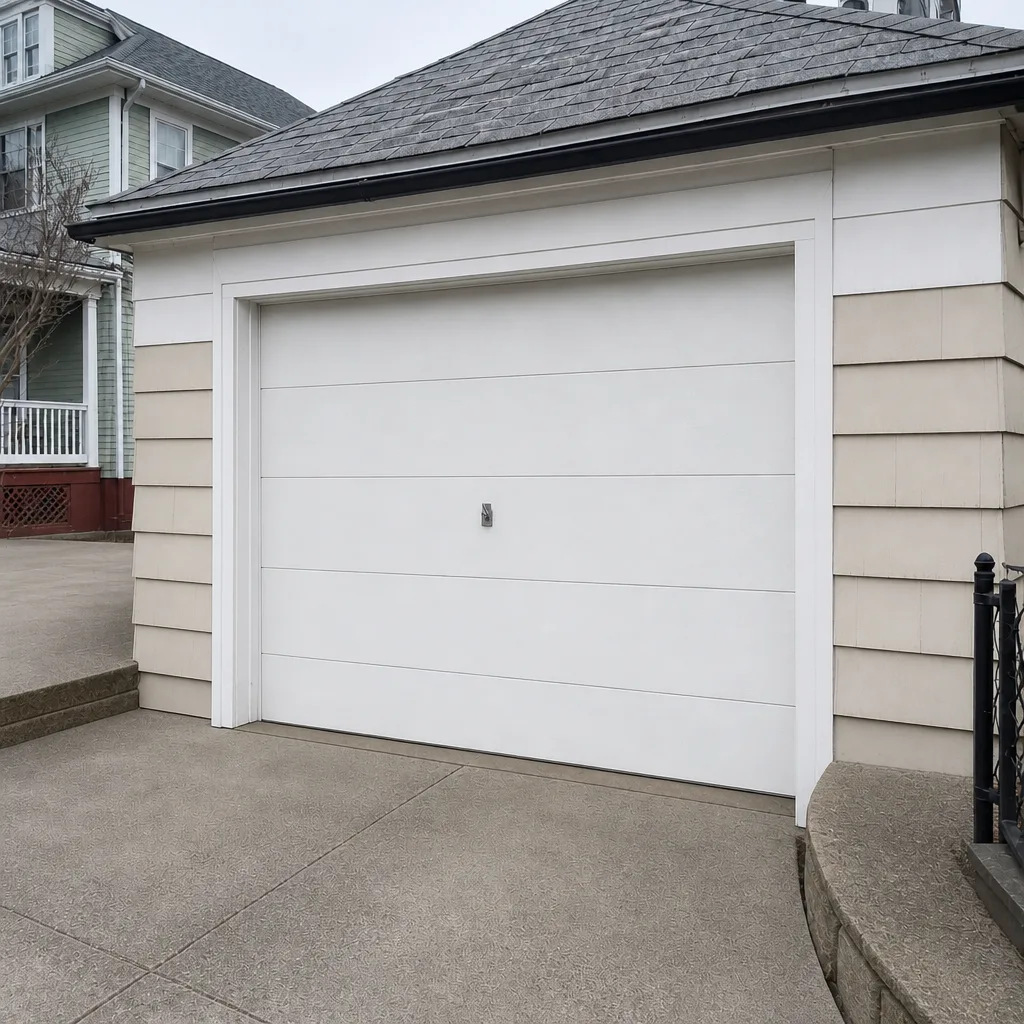
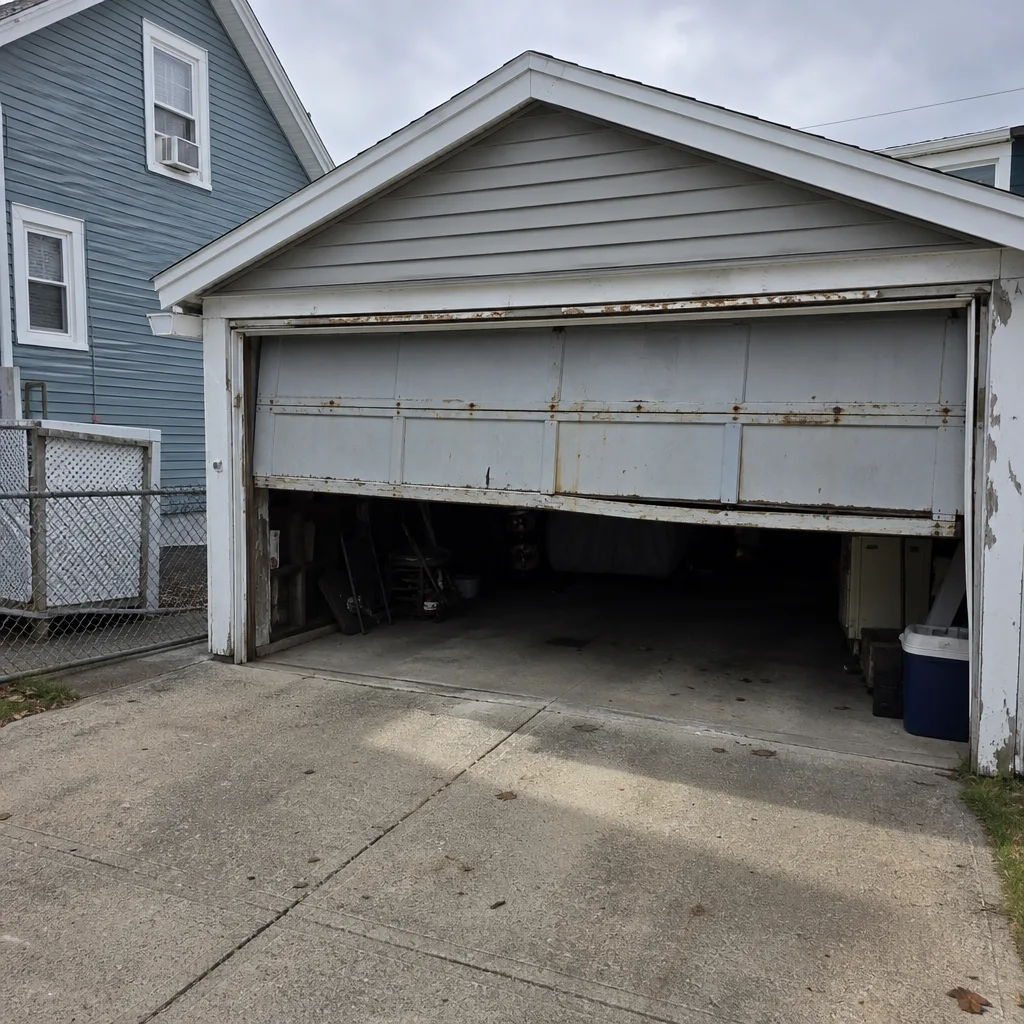
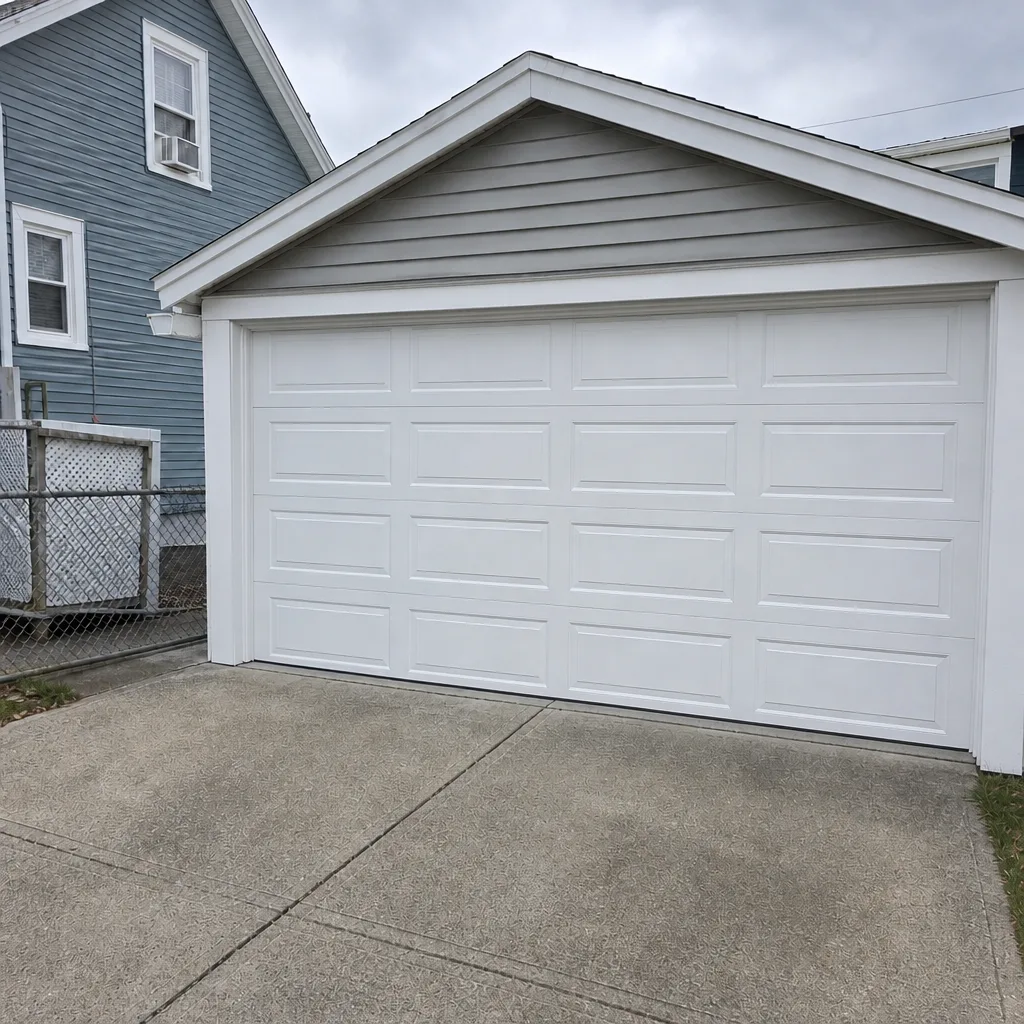
See the difference
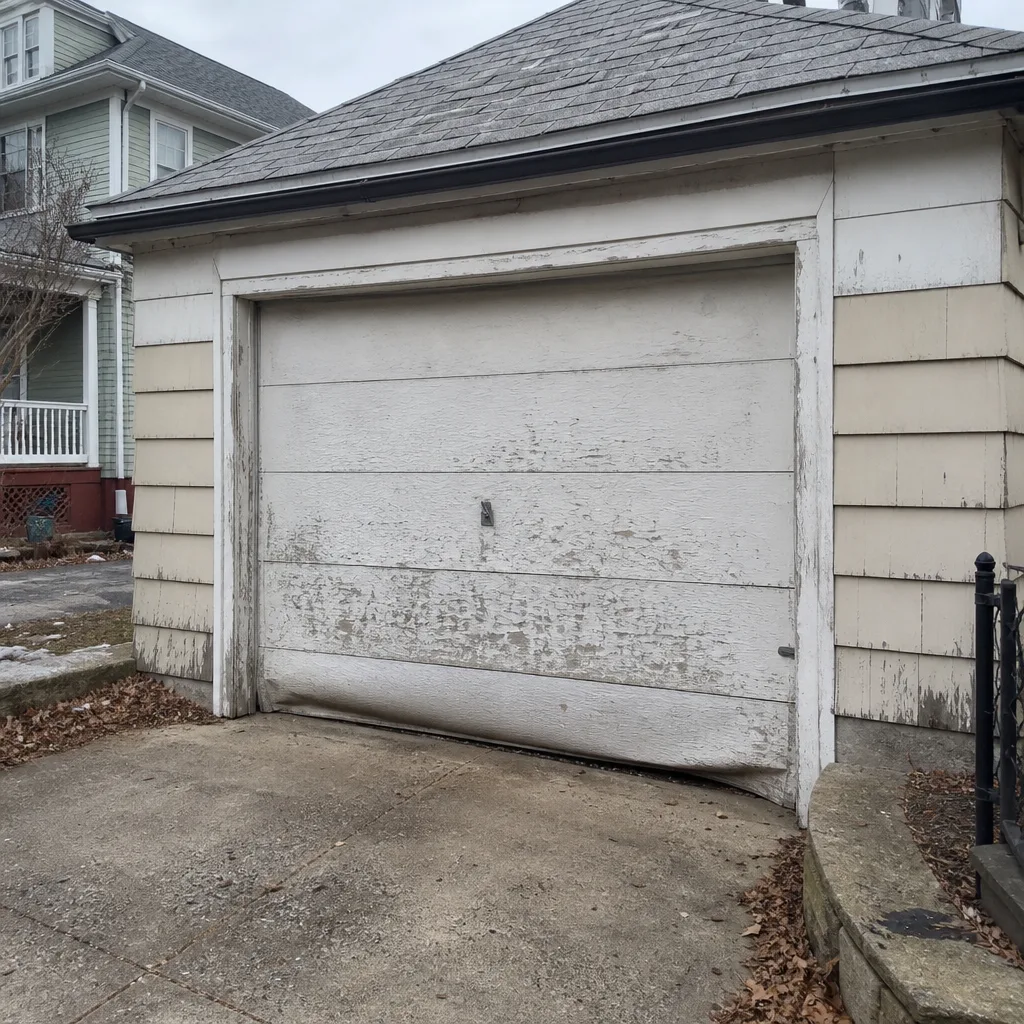 Before
 After
 Before
 After
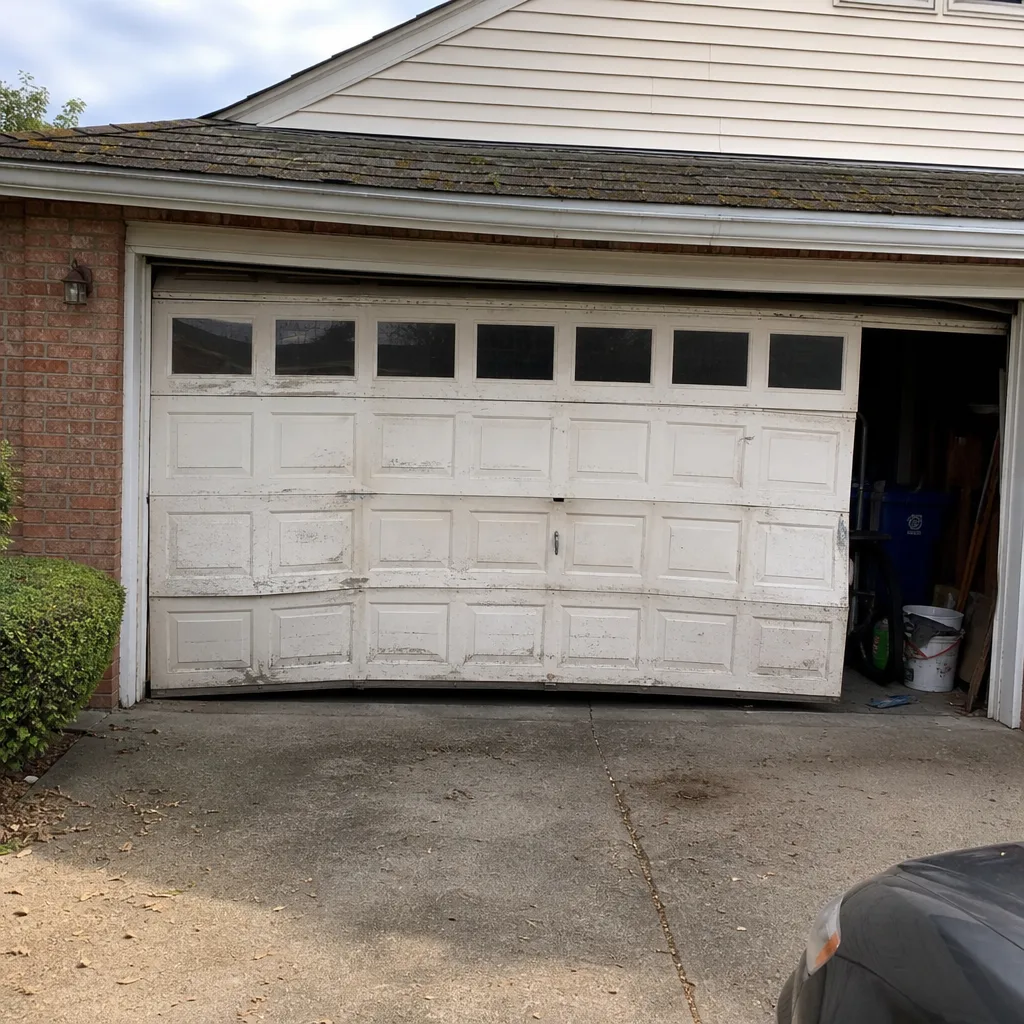 Before
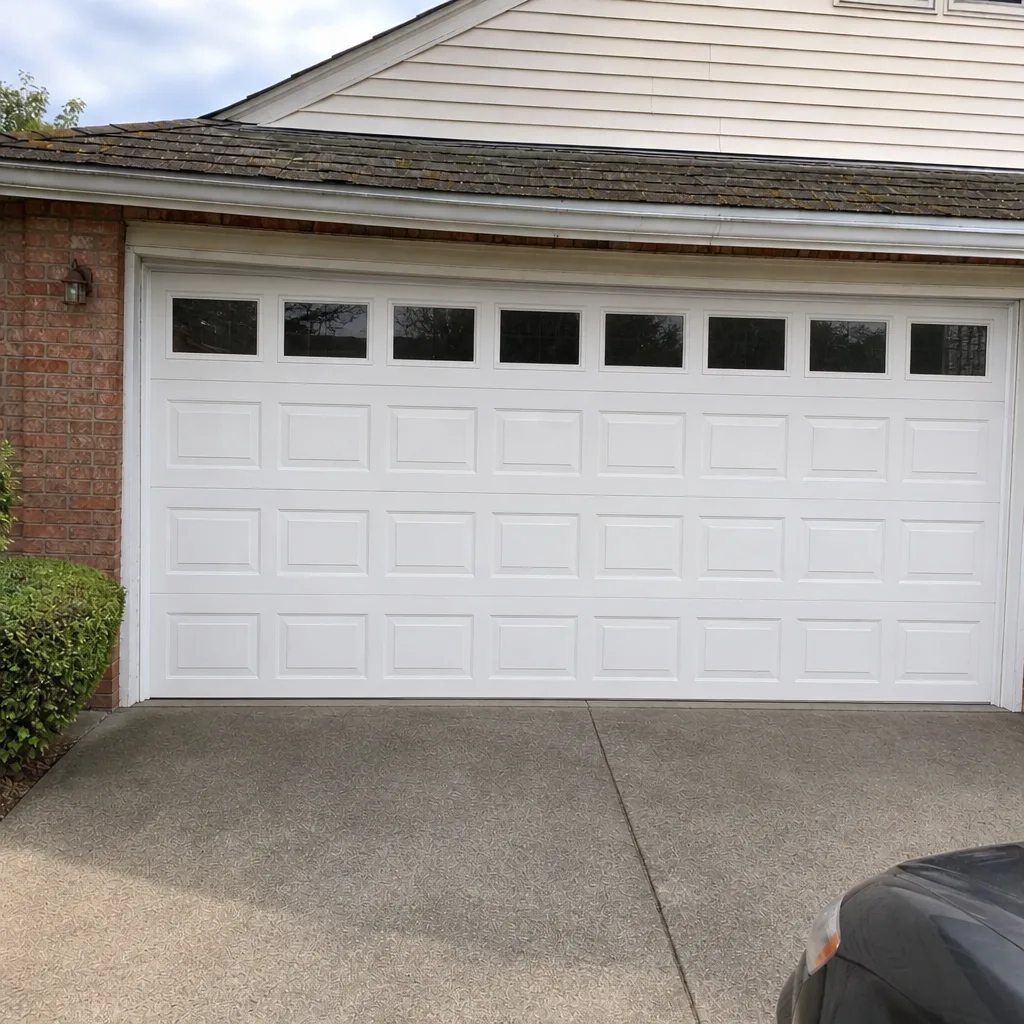 After
When to Call a Professional
Some seasonal checks are safe for you; others clearly aren’t. Call a professional if the door is out of balance, if you hear a bang or a groan, if the door won’t stay put when lifted by hand, or if anything looks wrong with a spring or a cable. Call if the door is stuck, frozen to the floor, or straining the opener. Call if a seal is cracked or brittle and needs replacing, if the opener reverses poorly or keeps disconnecting, or if salt corrosion has reached the hinges and lower rollers. Garage Door Repair South Boston offers free estimates in South Boston – call (844) 662-2561. We answer 24/7. Fast dispatch from 7am to 7pm, Sunday through Friday.
Frequently Asked Questions
Prep the bottom seal, switch to a low-temperature, salt-resistant lubricant before the first freeze, and check cable tension visually and from a distance. Don’t touch springs or cables – if anything looks slack or frayed, book a technician. These three actions reduce the odds of a winter failure. Call (844) 662-2561 for an exact quote – estimates are free.
Because everything winter loaded up – springs, cables, and seals – gets tested as use picks back up after the freeze-thaw stretch. Do the balance test, inspect the bottom seal, and check the cables and tracks from a distance right after the last hard frost. If the door feels off or looks worn, call (844) 662-2561 – estimates are free.
The local professionals we connect you with are licensed and insured as their state requires. We focus on the work itself: springs, repair, opener service, and installation. Call (844) 662-2561 for an exact quote – estimates are free.
The price is set per job by a written estimate, quoted and agreed before any work starts. Costs depend on the component, brand, and what the inspection turns up. We’ll give you a clear figure up front. Call (844) 662-2561 for an exact quote – estimates are free.
No – watch and listen from a distance and let a trained technician handle the springs. Springs and cables are under extreme tension and can cause serious injury if touched wrong. If you hear a bang or the door won’t stay put when lifted by hand, call (844) 662-2561 – estimates are free.
Yes – we’re trained on LiftMaster, Chamberlain, Genie, Clopay, Amarr, Wayne Dalton, Craftsman, and Raynor, both smart-enabled and legacy units. Call (844) 662-2561 for an exact quote – estimates are free.
We’re closed Saturday. We answer the phone 24/7, and crews are dispatched Sunday through Friday, 7am to 7pm. So a Sunday call reaches us and gets booked into the next opening. Call (844) 662-2561 for an exact quote – estimates are free.
The Bottom Line
Seasonal care for a South Boston garage door isn’t a single annual list – it’s four different jobs for four different seasons. Fall is for prep: the seal, the low-temperature grease, and a cable check before the first freeze. Winter is for watching from a distance, never touching a spring. Spring is the high-risk window – do the three post-frost checks. Summer is for UV on seals and south-facing panels, and knowing when to act versus monitor. Match the care to the season and your door is far less likely to surprise you.
If any seasonal check turns up something you’re not sure about, or if the door is off-balance, noisy, or straining the opener, that’s the moment to call. We’re a garage door specialist – 100% garage doors, every visit. Our technicians have up to 10 years of experience, and we carry parts so the right component usually goes on the first visit. Call (844) 662-2561 for a free estimate. We answer 24/7. Fast dispatch from 7am to 7pm, Sunday through Friday.
Written by the team at Garage Door Repair South Boston.